

Blog
AC Maintenance Guide: How Can You Keep Your Air Conditioner Running Like New

Your air conditioner worked perfectly when it was new, cooling your room quickly and efficiently. But over time, you may notice weaker cooling, reduced airflow, higher electricity bills, unpleasant odors, or even water leaking from the indoor unit. In most cases, these issues aren’t caused by a faulty air conditioner but by poor or overdue maintenance.
Regular AC maintenance helps your air conditioner deliver constant cooling, consume less electricity, improve indoor air quality, and last longer. In Nepal, maintenance is even more important due to the dust that accumulates quickly, the monsoon humidity that encourages mold growth, and the voltage fluctuations that can affect the performance of modern inverter ACs. Without proper care, these conditions can reduce cooling efficiency, increase energy consumption, and lead to expensive repairs.
This complete AC maintenance guide explains everything you need to know to keep your air conditioner running at its best. You will learn how often to service your AC, how to clean the air filters and the indoor and outdoor units, common problems you can fix yourself, when to call a professional technician, and seasonal maintenance tips tailored to Nepal’s climate.
Why Regular AC Maintenance Is Important
Like any appliance you use every day, an air conditioner requires routine maintenance to continue performing efficiently. Over time, dust, dirt, moisture, and everyday wear can reduce its cooling performance, increase energy consumption, and put extra strain on important components. In Nepal, where dust, monsoon humidity, and voltage fluctuations are common, regular maintenance is even more important to keep your AC running reliably year-round.
A well-maintained air conditioner does more than just last longer. It delivers better cooling performance, consumes less electricity, improves indoor air quality, and helps you avoid costly repairs. If you own an inverter air conditioner or are planning to buy one, it’s also worth understanding how inverter technology works. Read our Inverter AC vs Non-Inverter AC guide to learn how these systems improve energy efficiency and why regular maintenance is essential to keep them performing at their best. Here’s what regular AC maintenance can help you achieve:
- Better cooling performance: Clean filters and coils let air flow freely, so your room cools faster and more evenly.
- Lower electricity bills: A dirty AC can consume significantly more power to produce the same cooling output. Regular cleaning keeps your electricity bill in check.
- Longer lifespan: Dust, mold, and blocked airflow force the compressor to work harder, wearing it out years before it should fail.
- Better indoor air quality: Dirty filters and moldy drain trays circulate dust, allergens, and musty odors into your room, a real concern during Nepal’s monsoon.
- Prevents expensive repairs: Catching a clogged drain pipe or a dirty filter early is free. Ignoring it can lead to a compressor replacement or a gas refill costing thousands of rupees.

How Often Should You Service Your AC?
There isn’t a one-size-fits-all schedule for AC maintenance. How often your air conditioner needs cleaning or servicing depends on several factors, including where you live, how frequently you use it, and the environment around your home.
For example, an AC which is installed near busy roads or construction sites will collect dust much faster than one in a cleaner residential area. Similarly, homes with pets, smokers, or heavy daily AC usage may require more frequent maintenance. In Nepal, dust, pollution, and monsoon humidity can also accelerate dirt buildup and reduce your AC’s efficiency if it’s not cleaned regularly.
The table shown below provides a practical maintenance schedule that works for most households. You may need to clean or service your AC more frequently if it operates in a particularly dusty or demanding environment.
| Maintenance Task | Recommended Frequency |
| Clean air filters | Every 2-4 weeks |
| Wipe the indoor unit | Monthly |
| Clean outdoor condenser | Every 3 months |
| Professional servicing | Once every 12 months |
| Deep servicing | Before summer |
Can You Perform AC Maintenance at Home?
Yes, you can perform basic AC maintenance at home safely if the unit is working normally and only requires routine cleaning. Tasks such as cleaning the air filters, wiping the indoor unit, removing debris from the outdoor unit, and checking the drain pipe can usually be done without professional help.
However, refrigerant leaks, electrical faults, compressor problems, and damaged PCB components should always be handled by a qualified technician.If your AC is cooling normally and only needs routine cleaning, follow these steps to perform basic maintenance safely at home:
Step 1: Turn Off the Power Supply
Before touching any part of your AC, switch it off from the remote and turn off the power at the wall socket or breaker. This is a non-negotiable safety step: AC units run on high voltage, and working on a live unit risks electric shock or short-circuiting the PCB.
Step 2: Clean the Air Filters
The filter is the easiest part to clean and the one that most affects performance.
- Open the front panel of the indoor unit and gently slide out the filter mesh.
- Wash it under running tap water, using a soft brush for stubborn dust.
- If there’s grease or heavy grime, use a small amount of mild detergent, then rinse thoroughly.
- Let the filter air-dry completely in the shade.
- Reinstall it once it is fully dry.
Never install wet filters: Damp filters trap moisture inside the unit, encouraging mold growth and reducing airflow.
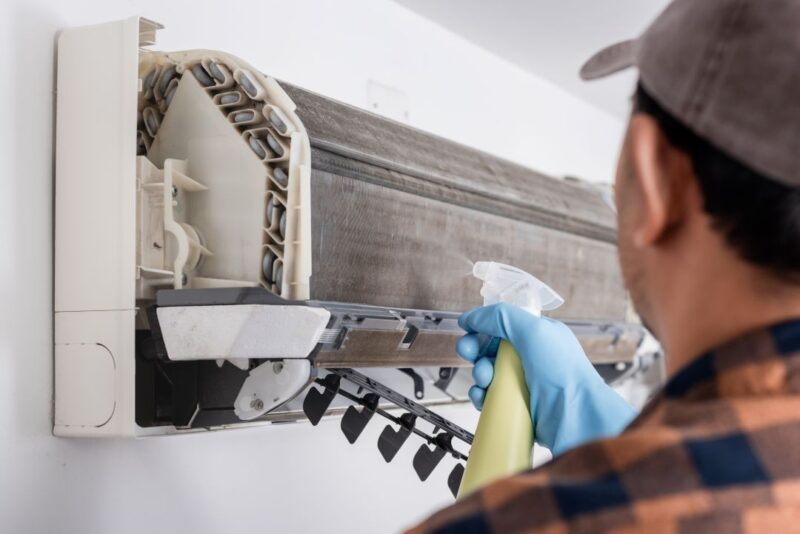
Step 3: Clean the Indoor Unit
With the filter out, wipe down the interior of the indoor unit:
- Use a microfiber cloth to remove dust from the outer casing and visible surfaces.
- Gently clean the vents and louvers (the horizontal flaps that direct airflow) with a soft brush or cotton swab, since dust tends to settle in these narrow gaps.
- Avoid spraying water directly onto electrical components inside the unit.
Step 4: Clean the Outdoor Unit
The outdoor condenser unit works hard all year and is often the most neglected part of AC maintenance.
- Remove leaves, plastic bags, and any debris trapped in the fins or fan grille.
- Brush off accumulated dust from the coil fins, working gently to avoid bending them.
- Make sure there’s clear space around the unit at least a foot of clearance so airflow isn’t restricted.
Don’t use pressure washers: High-pressure water can bend the delicate aluminum fins or force water into electrical parts, causing more damage than the dust itself.
Step 5: Check the Drain Pipe
The condensate drain pipe removes moisture that your AC pulls from the air. If it’s blocked:
- Water can back up and leak inside your room, damaging walls or flooring.
- Standing moisture inside the drain tray becomes a breeding ground for mold, which is often the source of that musty AC smell.
Check the pipe for slow drainage or blockages, and flush it gently with water if needed. If you notice persistent leakage, it’s a sign the blockage needs professional clearing.
Step 6: Restart and Test the AC
Once everything is reassembled, turn the power back on and test the unit:
- Cooling: Does the room cool down at the expected rate?
- Airflow: Is air coming out of all vents strong and steady?
- Noise: Any grinding, rattling, or buzzing sounds?
- Smell: Any musty or burning odor when the AC starts?
If everything checks out, your AC is ready to use. However, if you still notice weak cooling, unusual noises, water leaks, burning odors, or other signs of malfunction after cleaning, stop using the unit and contact a qualified AC technician for a proper inspection. If the technician determines that your current unit is undersized, outdated, or no longer cost-effective to repair, our Complete AC Buying Guide can help you choose the right AC capacity, features, and energy-efficient model for your home.
Tools You will Need to Clean Your AC at Home
Before you begin cleaning your air conditioner, gather the following tools. These basic household items will help you clean your AC safely and effectively without damaging its components.
- Soft microfiber cloth
- Soft-bristled brush
- Mild detergent diluted with water
- Vacuum cleaner (with a brush attachment, if available)
- Spray bottle (filled with clean water or a diluted detergent solution)
- Screwdriver (if needed to remove the filter panel)
- Protective gloves
If everything checks out, your AC is ready to use. If the problem persists after basic cleaning and maintenance, it’s likely beyond routine do-it-yourself care. Contact a qualified AC technician to safely diagnose and repair the issue.
What Are the Most Common AC Problems and How Can You Fix Them?

Even with regular maintenance, air conditioners can develop problems over time. Some issues can be resolved with basic cleaning and routine maintenance, while others require professional repair. Understanding the cause of each problem can help you restore your AC’s performance quickly and prevent further damage.
AC Isn’t Cooling Properly
The Problem
If your AC is running but not cooling effectively, dirty air filters, blocked airflow, or a dusty outdoor unit are the most common causes. In some cases, low refrigerant levels or compressor issues may also be responsible. If your air conditioner has never cooled efficiently since installation, it may also be the wrong type or capacity for your room. Learn how to choose the right model in our Complete AC Buying Guide.
How to Fix It
- Clean the air filters.
- Check the thermostat settings.
- Remove debris around the outdoor unit.
If the problem persists, contact a qualified AC technician.
Weak Airflow
The Problem
Weak airflow is usually caused by dirty filters, blocked vents, or dust buildup inside the indoor unit, making it harder for cool air to circulate.
How to Fix It
- Clean the air filters.
- Make sure vents aren’t blocked.
- Remove dust from the indoor unit.
If airflow doesn’t improve, have the blower fan inspected by a technician.
Water Leaking from the Indoor Unit
The Problem
A blocked drain pipe or clogged drain tray can prevent water from draining properly, causing leaks inside your home.
How to Fix It
- Check the drain pipe for blockages.
- Flush it gently with clean water.
- Clean the drain tray if accessible.
If the leak continues, call a qualified technician.
Bad Smell Coming from the AC
The Problem
Musty odors are often caused by mold, bacteria, or dust buildup inside the filters or drain system, especially during Nepal’s monsoon season.
How to Fix It
- Clean and dry the air filters.
- Wipe the indoor unit.
- Keep the drain system clean.
If the smell remains, schedule professional servicing.
Loud or Unusual Noises
The Problem
Grinding, rattling, or buzzing noises may indicate loose parts, debris, or worn internal components.
How to Fix It
- Check for loose panels or screws.
- Remove debris around the outdoor unit.
If the noise continues, switch off the AC and contact a technician.
Ice Forming on the AC Coils
The Problem
Frozen coils are usually caused by restricted airflow or low refrigerant levels, reducing cooling efficiency.
How to Fix It
- Turn off the AC and let the ice melt.
- Clean the air filters.
- Ensure vents are not blocked.
If the coils freeze again, contact a qualified technician.
If you’re looking for a quick summary, the table below highlights the most common AC problems, their likely causes, simple DIY fixes, and when it’s best to contact a qualified technician.
| Problem | Possible Cause | DIY Fix (Do it yourself) | Call a Technician? |
| AC not cooling | Dirty filter, low refrigerant | Clean filter, check thermostat | If cooling doesn’t improve |
| Weak airflow | Dirty filter, blocked vents | Clean filter and vents | If airflow remains weak |
| Water leaking | Blocked drain pipe | Clear the drain | If leakage continues |
| Bad smell | Mold or dirty filters | Clean filters and drain | If the odor persists |
| Loud noises | Loose parts or damaged components | Check for loose panels | Yes |
| Ice on coils | Restricted airflow, low refrigerant | Clean filter, thaw coils | If ice forms again |
How Should You Maintain Your AC During Different Seasons in Nepal?
Nepal’s climate changes throughout the year, and each season affects your air conditioner differently. Dust in summer, high humidity during the monsoon, and long periods of inactivity in winter can all impact your AC’s performance. Following a seasonal maintenance routine helps improve cooling efficiency, reduce electricity consumption, prevent costly repairs, and extend your air conditioner’s lifespan.
Summer
Summer is the busiest season for your air conditioner, making it the best time to perform preventive maintenance before temperatures peak.
- Schedule professional AC servicing before summer, ideally between March and April.
- Clean or replace the air filters to ensure maximum airflow and cooling efficiency.
- Ask a technician to inspect the refrigerant level and overall system performance.
- Remove dust, leaves, and debris from around the outdoor unit to maintain proper airflow.
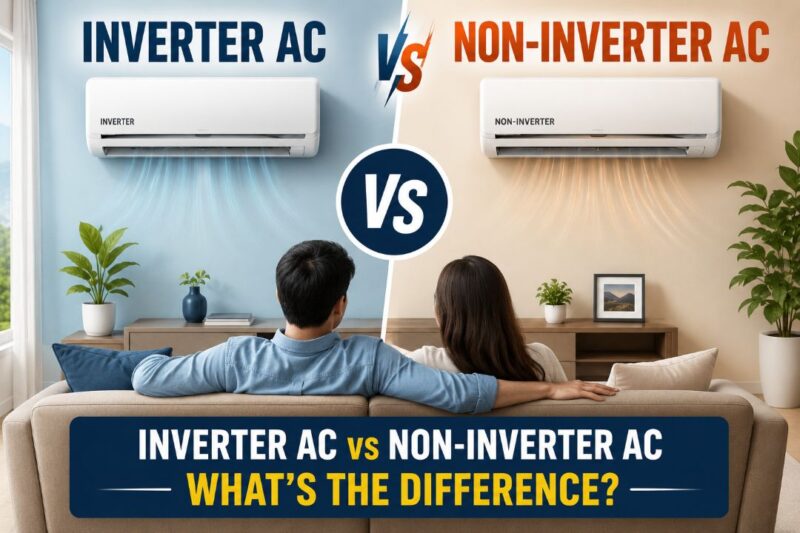
Modern inverter air conditioners are especially efficient during Nepal’s hot summers when they’re properly maintained. Learn how inverter technology differs from conventional systems in our Inverter AC vs Non-Inverter AC Guide.
Monsoon
High humidity during the monsoon increases the risk of mold growth, clogged drain pipes, and unpleasant odors. Regular maintenance during this season helps prevent moisture-related problems.
- Use Dry Mode on humid days to reduce indoor moisture.
- Check the drain pipe regularly to prevent blockages and water leakage.
- Keep the outdoor unit free from standing water, mud, and debris.
- Clean the air filters more frequently, as humidity allows dust and mold to build up faster.
Winter
If your air conditioner is used less frequently during winter, a few simple maintenance steps will help keep it in good condition until the next cooling season.
- Clean the air filters before storing or reducing use.
- Cover the outdoor unit with a breathable protective cover to minimize dust buildup.
- Disconnect the power supply if the AC will remain unused for an extended period.
- Run the AC for a few minutes every few weeks (if recommended by the manufacturer) to keep internal components functioning properly.
What Are the Most Common AC Maintenance Mistakes to Avoid?
Even with good intentions, improper maintenance can reduce your AC’s efficiency and lead to unnecessary repairs. Avoiding these common mistakes will help keep your air conditioner running safely, efficiently, and reliably.
- Skipping air filter cleaning for months at a time.
- Using harsh chemicals or abrasive cleaning products.
- Blocking airflow around the outdoor unit with furniture, plants, or other objects.
- Ignoring unusual noises, unpleasant odors, or water leaks.
- Waiting until the AC stops cooling before scheduling servicing.
- Cleaning coils or fins with high-pressure water.
- Running the AC with dirty or clogged filters.
Small maintenance mistakes may seem harmless, but over time they can increase electricity consumption, reduce cooling performance, and shorten your AC’s lifespan. Following the correct maintenance routine and scheduling professional servicing when needed will help keep your air conditioner operating at its best.
When Should You Call a Professional AC Technician?

While many routine AC maintenance tasks can be performed at home, some problems require professional expertise. If your air conditioner shows any of the following signs, avoid attempting DIY repairs and contact a qualified AC technician as soon as possible.
- Refrigerant (gas) leakage or suspected low refrigerant levels.
- Compressor problems, such as unusual overheating, failure to start, or poor cooling performance.
- PCB (Printed Circuit Board) failure, especially after a power surge or voltage fluctuation.
- Refrigerant refilling requires specialized equipment and training.
- Burning electrical smell, which may indicate a wiring or electrical fault.
- Ice forming on the indoor evaporator coils, even after cleaning the air filters.
- Unusual grinding, buzzing, or rattling noises that continue after basic maintenance.
- Persistent water leakage that doesn’t stop after clearing the drain pipe.
Attempting to repair these problems yourself can damage your air conditioner further and may also create serious electrical or safety risks. A qualified technician has the tools and expertise to diagnose the issue correctly and restore your AC safely.
When Should You Replace Your AC Instead of Repairing It?
Replacing your air conditioner is often the better option when repair costs become too high, breakdowns become frequent, or the unit no longer cools efficiently despite regular maintenance. While many AC problems can be repaired, there comes a point where investing in a new, energy-efficient model offers better long-term value.
Consider replacing your AC if:
- It’s more than 10-15 years old and nearing the end of its expected lifespan.
- You need repairs multiple times a year, making maintenance increasingly expensive.
- Your electricity bills continue to rise even after regular cleaning and servicing.
- Cooling performance remains poor despite professional maintenance and repairs.
- A major component, such as the compressor or PCB, needs replacement, and the repair cost is a significant percentage of the cost of a new AC.
- Replacement parts are difficult or expensive to find, especially for older models.
If your air conditioner meets one or more of these conditions, replacing it may be more cost-effective than continuing with repairs. Before purchasing a new unit, read our Complete AC Buying Guide to compare AC capacities, inverter and non-inverter models, energy efficiency, and the best options for homes in Nepal.
Keep Your AC Running Efficiently
Regular AC maintenance is one of the simplest and most effective ways to keep your air conditioner running efficiently. Cleaning the filters, following a seasonal maintenance routine, and scheduling professional servicing at least once a year can improve cooling performance, lower electricity bills, extend your AC’s lifespan, and help you avoid costly repairs.
If your air conditioner still struggles to cool your home, breaks down frequently, or requires expensive repairs despite regular maintenance, it may be time to consider replacing it with a newer, more energy-efficient model.
If you’re planning an upgrade, explore Nova Hub’s range of air conditioners to find the right model for your home and budget.
-
German Tech 1 Ton Smart Inverter AC GT – GT-1TON-AC
-19%₨64,990Saved ₨ 15,000 -
German Tech 1.5 Ton Smart Inverter AC GT-1 Ton-Inverter-Eco – GT-1.5TON-AC
-29%₨92,490Saved ₨ 37,500


Whether you need help maintaining your current AC or choosing a new energy-efficient model, Nova Hub is here to help. Get in touch with our team for expert advice and the latest AC offers by visiting our Facebook page.
Frequently Asked Questions
- How often should I clean my AC filter?
Every 2-4 weeks, especially in dusty areas of Kathmandu Valley or during peak summer usage.
- Can I clean my AC without professional help?
Yes, cleaning the filter, wiping the indoor unit, and clearing debris around the outdoor unit are all safe DIY tasks. Refrigerant checks and internal repairs should be left to a technician.
- How often should an AC be serviced in Nepal?
Once every 12 months for full professional servicing, ideally before summer, with additional filter cleaning done more frequently throughout the year.
- Why is my AC blowing warm air?
This is most often caused by a refrigerant leak, a failing compressor, or, in some cases, a severely clogged filter restricting airflow. A technician can diagnose the exact cause.
- Why does my AC smell bad?
A musty smell almost always indicates mold or bacterial buildup in the drain tray or indoor unit, which is common during Nepal’s humid monsoon season.