

Inverter AC vs Non-Inverter AC: Which One Is Better for Your Home in Nepal?

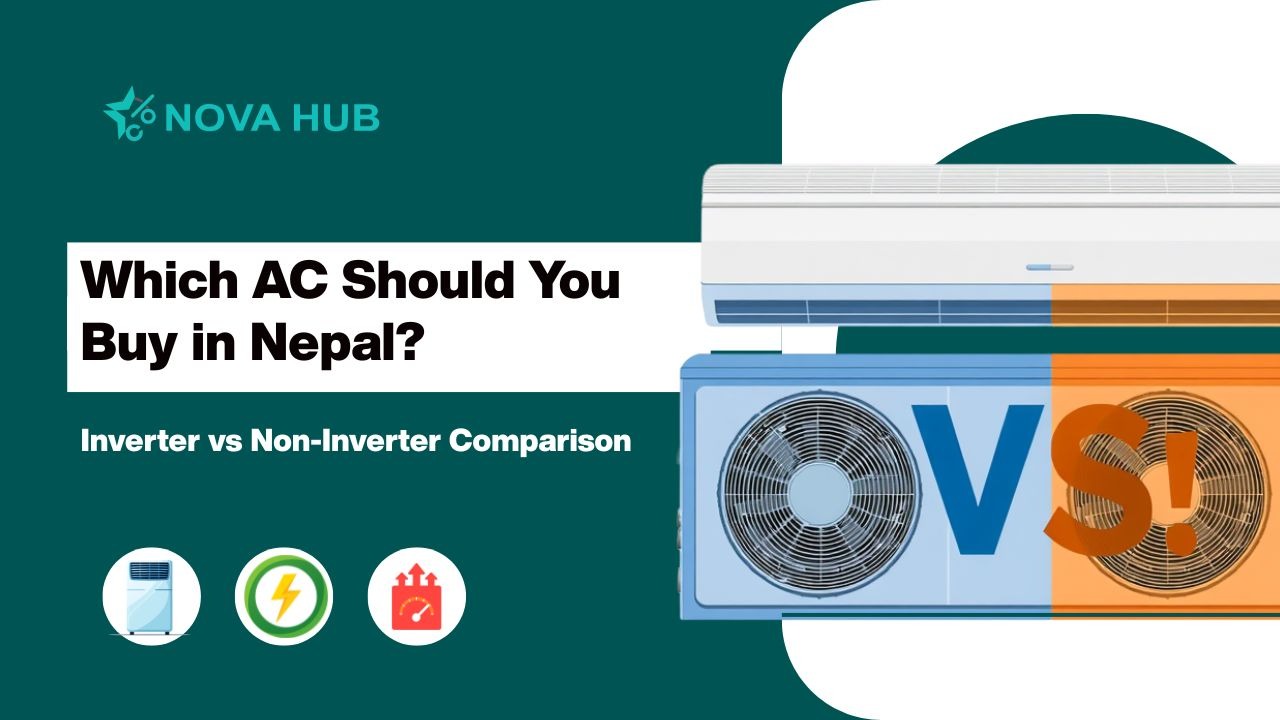
If you are planning to buy an air conditioner for your home, one of the first decisions is whether to choose an inverter AC or a non-inverter AC. While both can cool your room, they work differently and can significantly impact your electricity bills, comfort, and long-term costs.
For most homes in Nepal, choosing an inverter AC is the better long-term investment because it provides more consistent cooling, uses less electricity during regular use, and operates more quietly than a non-inverter AC. Although it has a higher upfront price, the long-term savings and improved comfort often make it worth the extra cost for families who use their AC frequently.
In this guide, you will learn the differences between inverter AC vs non-inverter AC, how each type works, and which option is the best choice for your home in Nepal. We’ll also compare their cooling performance, electricity consumption, upfront cost, maintenance requirements, and lifespan so you can choose the right air conditioner with confidence.
What Is an Inverter AC?
An inverter AC is an air conditioner that automatically adjusts its cooling power based on the room temperature. Instead of turning the compressor on and off repeatedly, it changes the compressor speed as needed.
When the room is hot, it works faster to cool it quickly. Once the set temperature is reached, it slows down to maintain steady cooling. This usually helps save electricity, keeps the room temperature more stable, and makes the AC quieter.
In simple terms, an inverter AC cools more efficiently by matching its performance to your cooling needs, making it a good choice for homes and offices that use AC for long hours.
What Is a Non-Inverter AC?
A non-inverter AC is known as a normal or fixed-speed AC which uses a compressor that runs at a single constant speed. It cools the room by turning on at full power and switching off once the set temperature is reached.
Due to this simple design, non-inverter ACs are usually cheaper to buy. However, they use more electricity during long use and do not maintain temperature as smoothly as inverter ACs.
Inverter AC vs Non-Inverter AC: What’s the Difference?
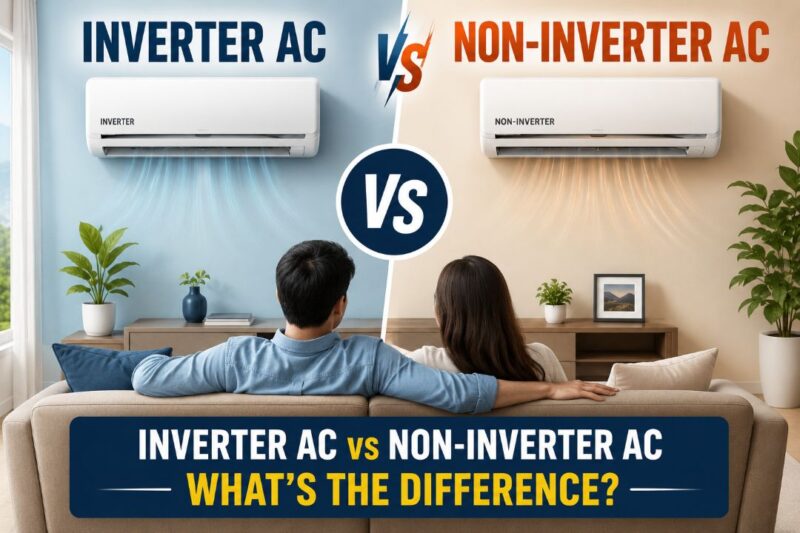
Now that you understand what an inverter AC and a non-inverter AC are and how they work, let’s compare them side by side. While both are designed to cool your room, they differ in cooling performance, electricity consumption, noise level, upfront cost, maintenance, and long-term value. Understanding these differences will help you choose the air conditioner that best fits your home, budget, and daily cooling needs.
| Feature | Inverter AC | Non-Inverter AC |
| Cooling Performance | Cools the room quickly and adjusts the compressor speed to maintain a consistent temperature with minimal fluctuations. | Cools the room effectively but maintains the temperature by repeatedly turning the compressor on and off, which can cause slight temperature fluctuations. |
| Electricity Consumption | Generally consumes less electricity during regular use because the compressor adjusts its speed instead of restarting repeatedly. | Usually consumes more electricity during extended use because the compressor repeatedly switches on and off at full power. |
| Noise Level | Operates more quietly because the compressor runs continuously at varying speeds rather than restarting frequently. | Usually produces more noise as the compressor starts and stops repeatedly during operation. |
| Initial Cost | Higher upfront purchase price due to advanced compressor technology and electronic controls. | Lower upfront purchase price, making it a budget-friendly option. |
| Long-Term Value | Better long-term value for households that use an AC regularly, thanks to lower electricity consumption and improved comfort. | Suitable for occasional use, but higher running costs can make it more expensive for frequent users over time. |
| Maintenance | Requires regular servicing like any AC. Repairs may cost slightly more because of the advanced electronic components. | Also requires regular servicing, and repairs are generally simpler and may cost less. |
| Lifespan | The compressor experiences less wear because it adjusts its speed instead of constantly restarting, which can help extend its lifespan with proper maintenance. | The frequent start-stop cycle may cause more compressor wear over time, though proper installation and regular servicing remain the biggest factors affecting lifespan. |
Which AC Is Best for You Based on Where You Live in Nepal?
Knowing the differences between an inverter AC and a non-inverter AC is only part of making the right choice. The best air conditioner for your home also depends on where you live in Nepal, how hot your area gets, and how often you plan to use your AC.
For example, the best AC for your home can change depending on your local climate, how hot your area gets, and how many hours a day you plan to use it. In places with longer and hotter summers, an inverter AC usually makes more sense because it handles regular use more efficiently. Let’s look at how to choose the right type of AC based on your location in Nepal.
Kathmandu
Summers in Kathmandu are relatively moderate compared to the Terai, but many households still use their AC daily during the hottest months. For families who use an AC regularly, an inverter AC is usually the better choice because it provides consistent cooling while helping reduce long-term electricity costs.
Terai Region (Birgunj, Janakpur, Nepalgunj, Butwal)
The Terai experiences long, hot summers, so air conditioners often run for extended hours. Since inverter ACs are designed to operate efficiently during continuous use, they are generally the more practical and cost-effective option for homes in this region.
Pokhara
Pokhara’s warm and humid climate makes consistent cooling important for indoor comfort. An inverter AC helps maintain a stable room temperature without the frequent on-and-off operation of a non-inverter AC, making it a suitable choice for everyday use.
Who Should Buy an Inverter AC?
-
-19%₨64,990Saved ₨ 15,000
-
-29%₨92,490Saved ₨ 37,500
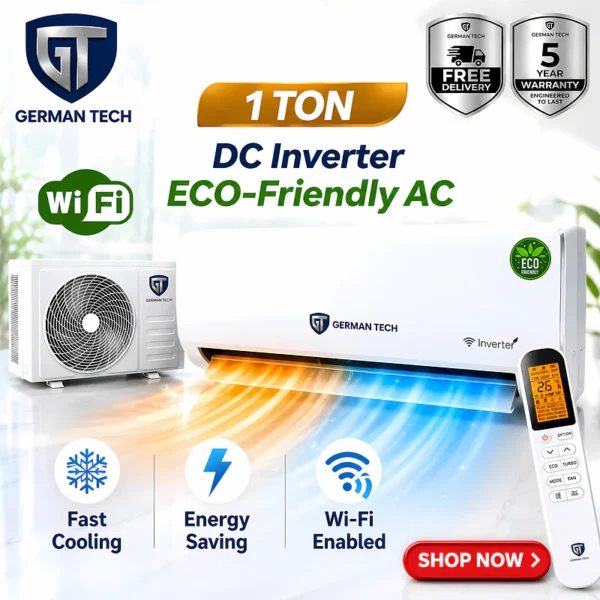
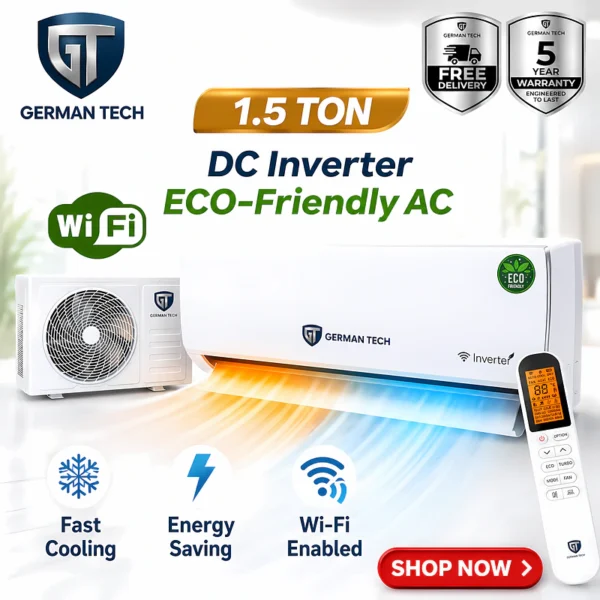
An inverter AC is generally the best choice for people who use their air conditioner regularly and want better comfort with lower long-term running costs. It is especially suitable for:
- Families who use an AC every day: If your air conditioner runs for several hours daily, an inverter AC can provide consistent cooling while using electricity more efficiently.
- Bedrooms used every night: Since inverter ACs operate more quietly and maintain a steady temperature, they help create a more comfortable sleeping environment.
- Living rooms, where the family spends most of the day: For spaces that need continuous cooling, an inverter AC delivers consistent comfort without frequent temperature fluctuations.
- Home offices: If you work from home, the quieter operation and stable cooling of an inverter AC can make your workspace more comfortable throughout the day.
- Homeowners looking to reduce long-term electricity costs: Although the initial purchase price is higher, an inverter AC can be a worthwhile investment for households that use air conditioning frequently.
Who Should Buy a Non-Inverter AC?
A non-inverter AC can still be a practical choice for people who don’t use an air conditioner regularly or have a limited upfront budget. It may be the right option for:
- Guest rooms used only occasionally – If it’s just a single room you use only from time to time, there’s usually no need to spend extra on an inverter model. A non-inverter AC can cool the space well without the higher upfront cost.
- Shops or small commercial spaces with limited daily use – Businesses that run their AC for only a few hours each day may find a non-inverter AC sufficient.
- Holiday homes or vacation properties – For homes that remain vacant for most of the year, a non-inverter AC offers an affordable cooling solution without paying extra for features you may rarely use.
- Buyers with a strict upfront budget – If keeping the initial purchase cost low is your top priority, a non-inverter AC is generally the more affordable option.
- Spaces where the AC is used only occasionally – Rooms that need cooling only a few times a month may not benefit enough from an inverter AC’s long-term energy savings to justify the higher purchase price.
While a non-inverter AC can be a good choice for occasional use, an inverter AC is generally the better long-term option for homes where the air conditioner is used regularly, thanks to its better energy efficiency, quieter operation, and more consistent cooling.
Which AC is Worth Buying in Nepal?
For most homes in Nepal, an inverter AC is worth buying because it offers better long-term value than a non-inverter AC. In fact, most people who use their air conditioners regularly prefer inverter ACs because they provide more consistent cooling, quieter operation, and lower electricity consumption in everyday use. Although the initial purchase price is higher, an inverter AC offers better long-term value for households that use air conditioning regularly, especially during Nepal’s hot summer months.
An inverter AC is the ideal choice for families, home offices, and households that use air conditioning regularly. It provides consistent cooling, quieter operation, and lower long-term running costs, making it a smart investment for everyday use. On the other hand, a non-inverter AC can still be a suitable option if you only need cooling occasionally or have a limited upfront budget. However, for most homes in Nepal, where air conditioners are used frequently during the hotter months, an inverter AC offers better long-term value and is generally the more practical choice. Still unsure which AC is right for your home? Read our Complete AC Buying Guide to learn how to choose the right capacity, energy rating, features, and AC type for your needs.
How to Choose the Right AC for Your Home

Choosing between an inverter AC and a non-inverter AC is only the first step. To find the right air conditioner for your home, you should also consider factors such as room size, AC capacity, energy efficiency, and the features that best match your daily needs.
Room Size
The size of your room plays a key role in choosing the right air conditioner. An AC with too little capacity may struggle to cool the space efficiently, while an oversized unit can increase unnecessary electricity consumption. Selecting the correct capacity helps ensure better cooling performance and improved energy efficiency.
AC Capacity
As a general guideline, you can choose the following AC capacities based on your room size:
- 1 Ton AC: Best suited for small bedrooms, study rooms, or compact offices.
- 1.5 Ton AC: A popular choice for average-sized bedrooms and living rooms.
- 2 Ton AC: Ideal for larger rooms, spacious living areas, or spaces that receive more heat throughout the day.
If you are looking for the right capacity, explore Nova Hub collections to find a model that matches your room size and cooling needs.
Before buying an AC, it is best to check what the unit offers so you can choose a model that fits your needs and avoid regret later. Here are a few important features to look at before making your purchase.
Energy Rating
Before buying an AC, check its energy rating. Models with a higher star rating are generally more energy-efficient and can help reduce electricity consumption over time, making them a better choice for homes where the AC is used regularly.
Cooling and Heating
Nepal experiences both hot summers and cold winters, so a Heat & Cool AC can be a practical investment. It provides cooling during the summer and heating during the winter, allowing you to use the same unit comfortably throughout the year.
Smart Features
Modern air conditioners come with features that make everyday use more convenient. Depending on the model, look for features such as Wi-Fi control, Sleep Mode, Turbo Mode, and Auto Clean, which can improve comfort, simplify operation, and help maintain the unit.
AC Maintenance
Buying the right air conditioner is only part of the equation. Regular maintenance helps your AC deliver consistent cooling, improves energy efficiency, and can extend its lifespan. Simple tasks like cleaning the air filters, scheduling periodic servicing, and keeping the outdoor unit free from dust can prevent performance issues and reduce long-term repair costs. To learn more, read our Complete AC Maintenance Guide.
Inverter AC vs Non-Inverter AC: Which Should You Choose?
There isn’t a single “best” air conditioner for everyone. The right choice depends on your budget, how often you use your AC, the size of your room, and the features that matter most to you.
If you use your air conditioner regularly, an inverter AC is generally the better long-term investment. It offers more consistent cooling, quieter operation, and lower electricity consumption during everyday use. On the other hand, if you only need an AC occasionally or have a limited upfront budget, a non-inverter AC can still be a practical and cost-effective option.
Whichever type you choose, make sure it matches your room size, cooling requirements, and daily usage. Selecting the right capacity, checking the energy rating, and buying from a trusted brand with reliable after-sales support are just as important as choosing between an inverter and a non-inverter AC.
If you’re exploring inverter ACs for your home, browse Nova Hub’s collection of 1 Ton, 1.5 Ton, and 2 Ton inverter ACs to find a model that suits your room size, budget, and cooling needs.
Not sure which AC is right for your home? Contact the Nova Hub team for expert recommendations based on your room size, budget, and cooling needs. You can reach us directly through our Facebook page, and we’ll be happy to assist you.
Frequently Asked Questions
1. Does an inverter AC really save electricity?
Yes, an inverter AC generally uses less electricity than a non-inverter AC because it adjusts the compressor speed instead of repeatedly turning it on and off. The actual savings depend on factors such as room size, daily usage, temperature settings, and how well the room is insulated. Homes that use an AC for several hours every day usually benefit the most from an inverter AC.
2. Is an inverter AC worth the higher price?
Yes, for most households that use an AC regularly. Although an inverter AC costs more upfront, it offers lower electricity consumption, quieter operation, and more consistent cooling over time. If you only use an AC occasionally, a non-inverter model may still be a suitable option.
3. Does an inverter AC work during a power cut?
Despite its name, an inverter AC does not continue running when the electricity goes out. The word “inverter” refers to the compressor technology that adjusts its speed to improve efficiency it is not the same as a home power inverter or backup battery.
4. Is an inverter AC expensive to maintain?
Not necessarily. Both inverter and non-inverter ACs require regular servicing, such as cleaning filters and checking refrigerant levels. While repairs for an inverter AC can sometimes cost more because of its advanced electronic components, routine maintenance is similar for both types of air conditioners.
5. Which AC is better for daily use in Nepal?
For most homes in Nepal, an inverter AC is the better choice for daily use. It provides consistent cooling, operates more quietly, and generally consumes less electricity during regular operation. A non-inverter AC is more suitable for occasional use or for buyers with a limited upfront budget.


