

AC Buying Guide in Nepal: Everything You Need to Know Before Buying an Air Conditioner


Buying an air conditioner in Nepal is not as simple as picking the biggest brand name or the lowest price tag. Due to fluctuating voltage in many areas, sharply different climates from the Terai to the Kathmandu Valley, and confusing technical terms like EER, DC inverter, and R32 refrigerant, it’s easy to end up with an AC that’s the wrong size, the wrong type, or one that quietly drains your electricity bill every month.
This AC buying guide in Nepal breaks down everything you actually need to know before you spend your money, from choosing between Split, Inverter, and DC Inverter AC types, to picking the correct tonnage for your room, understanding real electricity costs, and knowing which features are worth paying extra for.
Whether you are comparing AC prices in Nepal across brands or trying to find the best AC in Nepal for your specific city and room size, this guide will help you buy with confidence instead of guesswork.
Why Choosing the Right AC Matters
Buying the right AC the first time saves money, lowers electricity bills, and ensures reliable cooling for years. Choosing the wrong size or type often leads to poor performance and higher running costs. Getting it right the first time affects:
- Comfort: The right AC cools or heats evenly, without cold spots, damp air, or units that never quite catch up to the set temperature
- Electricity savings: An energy-efficient AC matched correctly to your room size can cut your monthly power bill significantly compared to an oversized or undersized unit
- Long-term durability: The right type and installation reduce strain on the compressor, extending the AC’s working life well past its warranty period
- Better cooling performance: A well-matched air conditioner in Nepal’s variable climate performs consistently through both hot summers and cold winters, especially with Hot & Cold models
Getting any one of these wrong, buying too small a unit to save money upfront, ignoring your region’s climate, or skipping proper installation is the single biggest reason people regret their AC purchase within the first year. To avoid these common mistakes, explore our Air Conditioner collection and compare different capacities and features before making your decision.
What are the different types of Air Conditioners Available in Nepal?
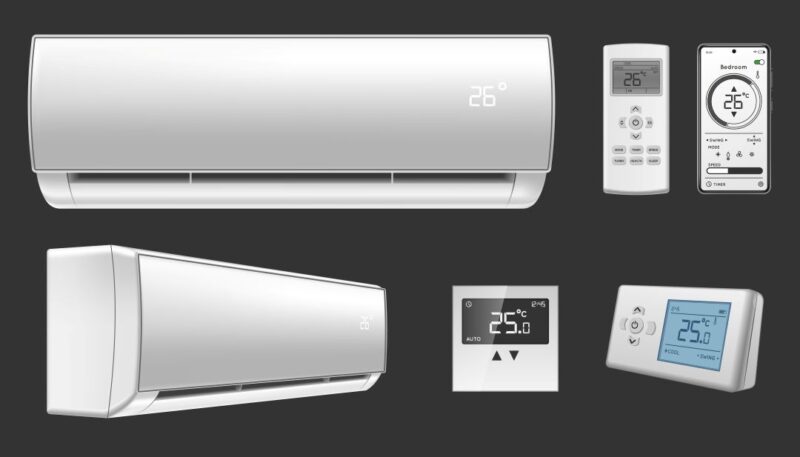
Choosing the right AC starts with understanding the different types of AC available in the Nepali market. Each type offers unique features, energy efficiency, and cooling performance, making it suitable for different homes, room sizes, and climates. Here’s a breakdown of the most common air conditioners available in Nepal and how they differ.
- Split AC
A split AC is by far the most common type sold in Nepal, and for most homes, it’s the right default choice. It has two separate units, an indoor unit mounted on the wall and an outdoor compressor unit connected by refrigerant piping. This system offers greater efficiency and quieter indoor performance than outdated window models.
- Inverter AC
An inverter AC uses a variable-speed compressor instead of the traditional on/off cycling used in non-inverter models. Rather than switching off completely once your room reaches the desired temperature, the compressor slows down and keeps running at low power to maintain the temperature. The result is steadier temperatures, lower electricity use, and less mechanical wear over time.
- DC Inverter AC
A DC inverter AC takes this a step further. It uses a DC motor inside the compressor, controlled with more precision than a standard AC inverter motor. In practical terms, this means:
- Faster response to temperature changes
- Noticeably quieter operation, since the motor runs smoother
- Better long-term energy efficiency, particularly useful given Nepal’s rising electricity tariffs
- Less heat is generated internally, which extends the compressor’s lifespan
If your budget allows even a small step up, a DC inverter AC in Nepal is generally the better long-term buy over a standard inverter unit.
- Hot & Cold AC
A Hot & Cold AC can both cool your room in summer and heat it in winter, using reverse-cycle technology. In Nepal’s hill and valley regions, where winter temperatures drop noticeably, this single appliance can replace power-hungry room heaters, halogen heaters, or gas heaters, often paying for the price difference within a couple of winters. If you’re looking for year-round comfort, explore our Hot & Cold Air Conditioners to find models suitable for both summer cooling and winter heating.
- Cooling-Only AC
A cooling-only AC does exactly what the name suggests: it’s built purely for summer cooling with no winter heating function. It’s typically a little cheaper upfront and is a sensible choice if you live somewhere with short, mild winters where a heater isn’t really necessary.
Which AC Is Best for Your Region in Nepal?
Nepal’s diverse climate means there is no one-size-fits-all air conditioner. The ideal AC depends on where you live, your cooling needs, and whether you need heating during winter. Use the table below to find the best AC type for your region.
| Region | Recommended AC | Why |
| Kathmandu Valley | Hot & Cold DC Inverter AC | Cold winters make heating useful; the DC inverter keeps running costs down year-round |
| Pokhara | Hot & Cold Inverter AC | Cooler evenings and monsoon humidity call for a versatile, efficient unit |
| Hilly Regions | Hot & Cold AC | Noticeably cold winters make heating capability essential, not optional |
| Terai (Biratnagar, Chitwan, Butwal, Nepalgunj) | Cooling Only or Hot & Cold (based on need) | Short, mild winters mean cooling performance matters most; heating is optional |
If you live in a colder region and skip the heating function to save money, you’ll likely end up buying a separate heater anyway, and running two appliances usually costs more in the long run than one efficient Hot & Cold AC.
Inverter AC vs DC Inverter AC vs Non-Inverter AC
Not all air conditioners are built in the same way. While Inverter and DC Inverter ACs are designed to deliver better energy efficiency and consistent cooling, Non-Inverter ACs are often more affordable upfront but consume more electricity over time. Understanding the differences between these technologies will contribute to choose the right AC based on your budget, cooling needs, and long-term savings.
| Feature | Non-Inverter | Inverter | DC Inverter |
| Electricity Usage | Highest compressor runs at full power or shuts off | Lower variable speed reduces waste | Lowest most precise motor control |
| Noise Level | Noticeable start-stop noise | Quieter, smoother operation | Quietest of the three |
| Cooling Speed | Fast initially, then cycles off and on | Steady and consistent | Fastest response to temperature changes |
| Lifespan | Shorter more wear from constant cycling | Longer | Longest least mechanical strain |
| Initial Cost | Lowest | Moderate | Highest |
Who should choose what:
- Non-inverter AC are suited for occasional use, guest rooms where upfront cost matters more than running cost
- Inverter AC is a solid middle ground for most homes, balancing price and long-term electricity savings
- DC Inverter AC is best for bedrooms, offices, or any room where the AC runs for extended hours daily, since the electricity savings pay off the higher upfront cost over time
Why Choosing the Right AC Capacity Matters

The choice of AC with the proper capacity is equally important to choosing the proper model. The AC that is not suitable may fail in its task of cooling the room and use more energy, while the AC that is too big might cool your room too fast and cause inefficiency. The proper choice of AC is important for perfect cooling, energy saving, and performance. You can refer to the table below to find out which one is ideal for your room size.
1 Ton AC
The 1 Ton Air Conditioner will be ideal for use in small bedrooms or home offices that measure up to 120 square feet. The unit will cool efficiently without using too much electricity.If you’re looking for an energy-efficient solution for a small bedroom or home office, check out our 1 Ton Inverter AC, which combines efficient cooling with lower electricity consumption.
1.5 Ton AC
1.5 Ton AC is ideal for medium size rooms that are 120 to 180 square feet in size. It is one of the most preferred choices for the master bedroom, living room, and other family rooms.
2 Ton AC
A 2 Ton AC is designed for larger rooms ranging from 180–260 sq. ft. It’s ideal for spacious living rooms, open-plan areas, offices, or rooms with high ceilings and greater heat exposure.
| Room Size | Recommended AC Capacity |
| Up to 120 sq. ft. | 1 Ton AC |
| 120–180 sq. ft. | 1.5 Ton AC |
| 180–260 sq. ft. | 2 Ton AC |
Room size isn’t the only factor when choosing an AC. Ceiling height, the amount of direct sunlight, the number of occupants, and insulation can also affect the ideal AC capacity for your space.
Ready to choose the right AC for your space? Explore our range of Air Conditioners available in different capacities, including 1 Ton, 1.5 Ton, and 2 Ton models, and find the perfect fit for your room size and cooling needs.
Copper vs Aluminum Condenser Coil: Which Is Best for Nepal?
Now that you know how to choose the right AC capacity, it’s time to look at another feature many buyers overlook: the condenser coil material. While it may not seem important at first, choosing between a copper and an aluminum condenser coil can affect your AC’s cooling performance, durability, maintenance costs, and overall lifespan. Understanding the difference now can help you avoid an expensive mistake later.
| Copper | Aluminum |
| Faster cooling | Lower cost |
| Easier to repair | Harder to repair |
| Longer lifespan | More prone to corrosion |
For Nepal specifically, copper coils are generally the better choice. They handle voltage fluctuations more reliably, resist corrosion better in humid regions, and critically, can be welded and repaired locally if they develop a leak. Aluminum coils, by contrast, often require a full and expensive replacement when damaged, since local technicians typically can’t repair them as easily.
If a listing doesn’t specify the coil material, it’s worth asking directly before buying, especially for outdoor units that will be exposed to Nepal’s monsoon humidity and dust year-round.
Energy Efficiency & Electricity Consumption
Once you’ve chosen the right AC type and capacity, electricity consumption is usually the next biggest concern for most buyers in Nepal and for good reason. An air conditioner is often one of the highest electricity-consuming appliances in a home. Choosing an energy-efficient model can significantly reduce your monthly electricity bill, and most modern inverter ACs are far more efficient than traditional non-inverter models.
Estimated Monthly Electricity Cost by AC Size
One of the biggest concerns when buying an AC is how much it will add to your electricity bill. While the exact cost depends on your daily usage, room insulation, thermostat settings, and the latest electricity tariffs published by the Nepal Electricity Authority (NEA), the estimates below provide a general idea of monthly running costs.
| AC Size | Estimated Power Consumption | Estimated Monthly Cost |
| 1 Ton Inverter AC | 0.8-1.0 kWh/hour | NPR 2,500-3,500 |
| 1.5-ton Inverter AC | 1.0-1.3 kWh/hour | NPR 3,500-4,800 |
| 2 Ton Inverter AC | 1.4-1.8 kWh/hour | NPR 4,800-6,500 |
Pro Tip: You can reduce your AC’s electricity consumption by keeping doors and windows closed, using curtains to block direct sunlight, setting the temperature between 24–26°C, and cleaning the air filters regularly. These simple practices help your AC cool more efficiently and lower your monthly electricity bill.
AC vs Air Cooler: Which One Should You Buy?
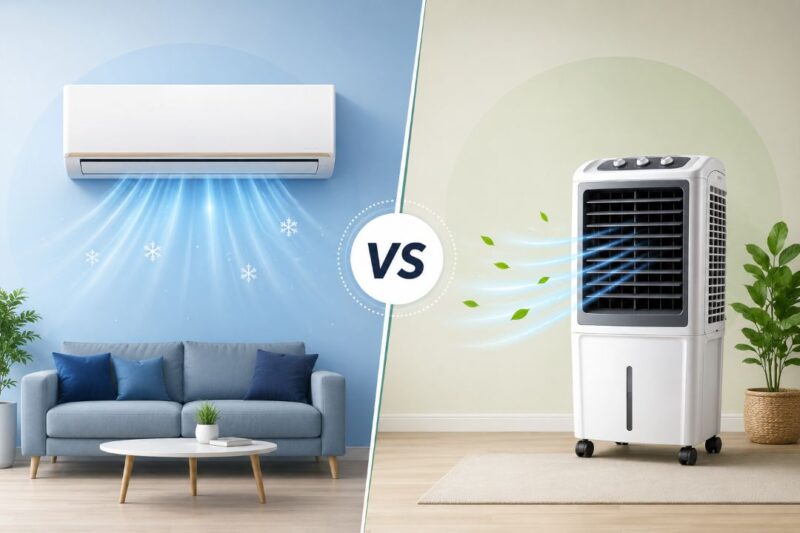
If you’re still undecided on whether you even need a full air conditioner, it’s worth comparing it against a simpler alternative first.
| Air Conditioner | Air Cooler |
| Faster cooling | Lower upfront cost |
| Better humidity control | Best for dry climates |
| Higher electricity use | Lower electricity use |
Choose an AC if you want precise temperature control, need to manage humidity during monsoon months, or want heating capability for winter. Choose an air cooler if you’re working with a tighter budget, live in a well-ventilated space, and don’t mind slightly higher humidity in exchange for a much lower electricity bill. If an air cooler sounds like the better option for your needs, explore our Air Cooler collection to compare the latest models and find the right one for your home.
Important Features to Look for Before Buying an AC
Beyond choosing the right AC type and capacity, the features below can improve cooling performance, energy efficiency, and long-term reliability.
- R32 Refrigerant: An eco-friendly refrigerant that delivers efficient cooling and is used in most modern Inverter and DC Inverter ACs.
- Turbo Cooling: Cools your room quickly, making it ideal for hot summer days.
- Sleep Mode: Automatically adjusts the temperature at night for better comfort and lower electricity consumption.
- Auto Restart: Restores your previous settings after a power outage or voltage fluctuation.
- Golden Fin Coating: Protects the condenser coils from rust and corrosion, increasing the AC’s lifespan.
- Self-Cleaning Function: Reduces dust and mold buildup, helping maintain cleaner air and better performance.
- Wi-Fi Connectivity: Lets you control your AC remotely using a smartphone app.
- Air Purification Filters: Help remove dust and allergens, improving indoor air quality.
- Warranty: Choose an AC with at least a 1-year comprehensive warranty and a 5–10-year compressor warranty for added peace of mind.
AC Installation Tips for Nepal
A high-quality AC will only perform at its best if it’s installed correctly. Proper installation improves cooling efficiency, reduces electricity consumption, and helps extend the lifespan of your air conditioner.
- Indoor Unit Placement: Install it where air can circulate freely, away from curtains, furniture, or other obstructions.
- Outdoor Unit Ventilation: Ensure the outdoor unit has sufficient clearance to release heat efficiently.
- Avoid Direct Sunlight: Placing the outdoor unit in direct sunlight can reduce efficiency and increase electricity consumption.
- Refrigerant Pipe Length: Have the AC installed by a certified technician. Proper installation improves cooling and reduces electricity consumption.
- Professional Installation: Always choose a qualified technician to avoid issues such as gas leaks, water leaks, and poor cooling performance.
Do You Need a Voltage Stabilizer in Nepal?
Power fluctuations are still common in some parts of Nepal and can damage your AC’s compressor or circuit board over time. Whether you need a voltage stabilizer depends on:
- Built-in Voltage Protection: Many modern Inverter and DC Inverter ACs already include voltage protection.
- Power Supply in Your Area: Homes with frequent voltage fluctuations may benefit from an external stabilizer.
- Manufacturer’s Recommendation: Always check the specifications or user manual for your AC model.
If your area experiences unstable electricity and your AC doesn’t have built-in protection, investing in a voltage stabilizer can help prevent costly repairs.
How Can You Maintain Your AC for Better Performance?
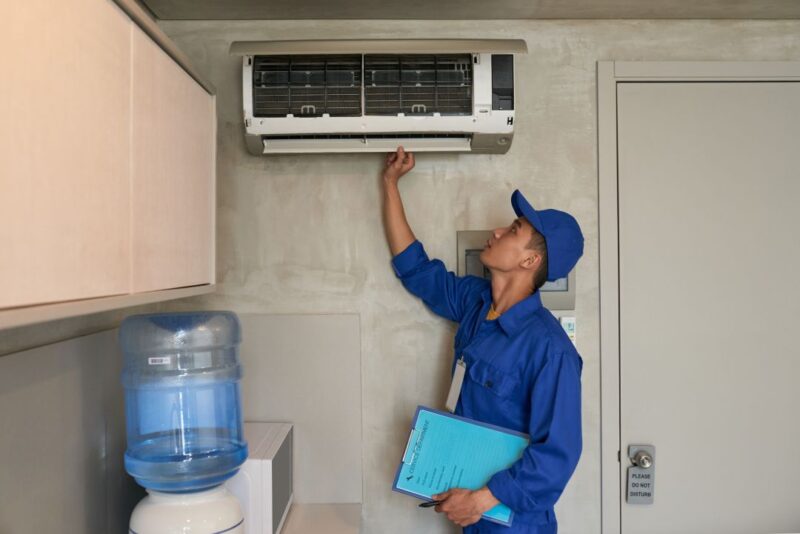
Regular maintenance is the major way to keep your AC running efficiently for years to come. By following a few simple maintenance practices, you can improve cooling performance, reduce electricity consumption, prevent costly repairs, and extend the lifespan of your air conditioner.
- Clean the Filters: Wash the air filters every 2-4 weeks during regular use to maintain proper airflow.
- Schedule Annual Servicing: Have your AC professionally serviced at least once a year.
- Keep the Outdoor Unit Clean: Remove dust, leaves, and debris to ensure proper airflow.
- Check Refrigerant Levels: Low refrigerant can reduce cooling efficiency which should be inspected by a technician.
- Service Before Summer: A pre-season maintenance check helps identify issues before peak usage.
Need professional assistance? Book our AC Installation & Maintenance service to keep your air conditioner running efficiently throughout the year.
Ready to Choose the Right AC?
Buying an air conditioner is a huge investment, so taking the time to choose the right one can save you money, improve comfort, and reduce future maintenance costs. By selecting the right AC type, capacity, and features based on your room size, budget, and local climate, you’ll enjoy reliable cooling and better energy efficiency for years to come.
Whether you’re looking for an Inverter AC, DC Inverter AC, or a Hot & Cold AC, exploring different options before making a decision is always worthwhile.
Ready to find the perfect air conditioner? Browse Nova Hub’s collection of Air Conditioners, compare models, and choose the one that best fits your home and lifestyle. If you need help, our team is always here to guide you toward the right choice.
Frequently Asked Questions
Which AC is best for Nepal?
For most of Nepal, a Hot & Cold DC Inverter AC offers the best overall balance — it handles both Kathmandu Valley’s cold winters and Terai’s hot summers, while keeping electricity costs down through variable-speed cooling.
Is a DC Inverter AC worth buying?
Yes, especially if you’ll run the AC for several hours daily. The higher upfront cost is usually offset over 2–3 years through lower electricity bills and reduced compressor wear compared to non-inverter models.
What size AC do I need?
As a general guide, use a 1 ton AC for rooms up to 120 sq. ft., a 1.5 ton AC for 120–180 sq. ft., and a 2 ton AC for 180–260 sq. ft. Adjust upward if your room has high ceilings, direct sunlight, or poor insulation.
How much electricity does a 1 Ton AC use?
A 1-ton inverter AC typically uses around 0.8–1.0 units of electricity per hour under moderate conditions, though this varies with room insulation, outdoor temperature, and usage patterns.
Does a Hot & Cold AC save money?
In colder regions like Kathmandu or hilly areas, yes, a Hot & Cold AC can replace separate heaters in winter, often saving money overall compared to running two different appliances.


