

OLED vs QLED vs LED TV in Nepal: Which One Fits Your Room and Budget?

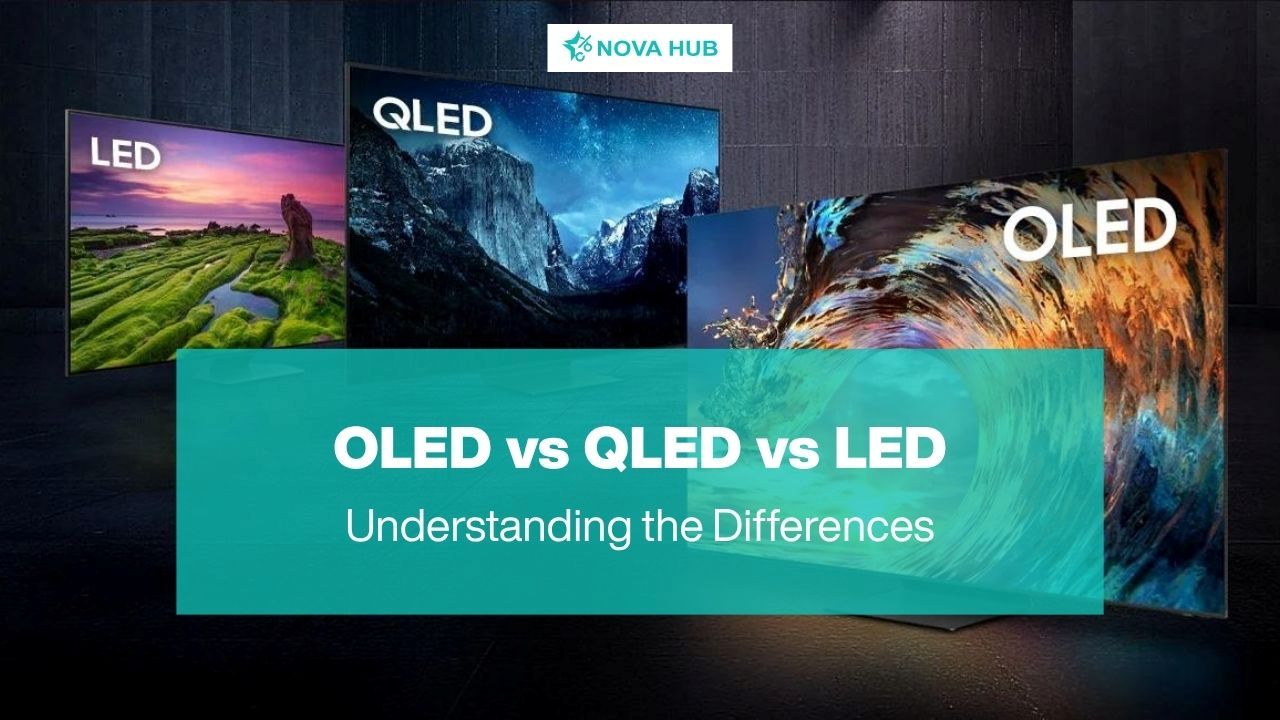
Choosing a new TV is no longer just about picking the right screen size. You will come across terms like LED, QLED, OLED, Mini-LED, 4K, and HDR, which can make the buying decision confusing.
Among them, OLED, QLED, and LED are three of the most common TV technologies buyers compare. But which one is actually best?
OLED generally offers the best picture quality, with excellent contrast and deep blacks. QLED is a strong choice for bright rooms because of its high brightness and vibrant colours, while LED TVs are often a more practical option for buyers looking for good everyday performance at a lower cost.
However, no single TV technology is best for everyone. The right choice depends on your room, viewing habits, picture-quality expectations, and budget.
For buyers in Nepal, it is also important to consider product availability, warranty, and after-sales service before choosing a TV. In this guide, we will compare OLED, QLED, and LED TVs in simple terms to help you decide which one is right for your home.
OLED vs QLED vs LED TV: Quick Comparison
| Feature | LED TV | QLED TV | OLED TV |
| Picture quality | Good | Very good | Excellent |
| Black levels | Good | Better than basic LED | Excellent |
| Contrast | Good | Very good | Excellent |
| Brightness | Good | Excellent | Very good |
| Viewing angle | Good | Good | Excellent |
| Motion handling | Good | Very good | Excellent |
| Burn-in risk | No typical OLED burn-in concern | No typical OLED burn-in concern | Possible with prolonged static content |
| Price | Usually more affordable | Mid to premium | Usually more expensive |
| Best for | Everyday viewing | Bright rooms and sports | Movies and premium viewing |
In simple terms:
- Choose LED if affordability and everyday use are your main priorities.
- Choose QLED if you want higher brightness and strong picture quality, especially in a bright room.
- Choose OLED if you want deep blacks, excellent contrast and a premium movie or gaming experience.
Explore TV Options Available at Nova Hub
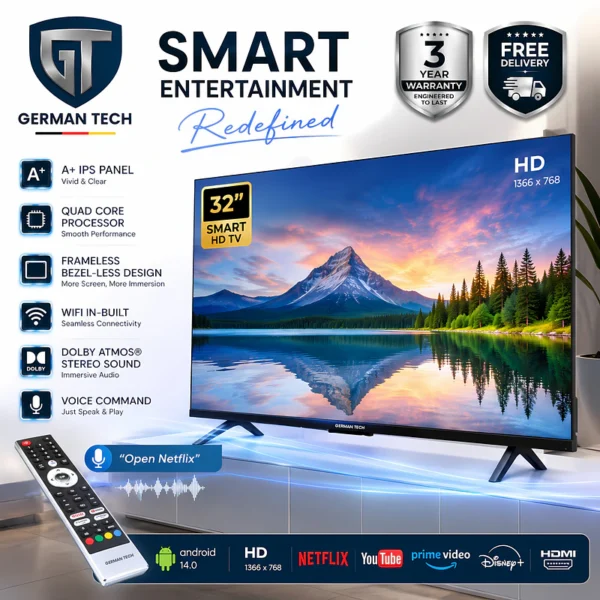
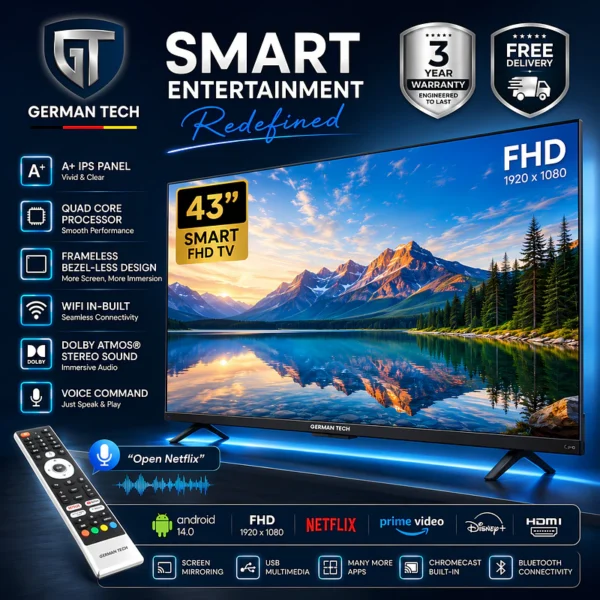
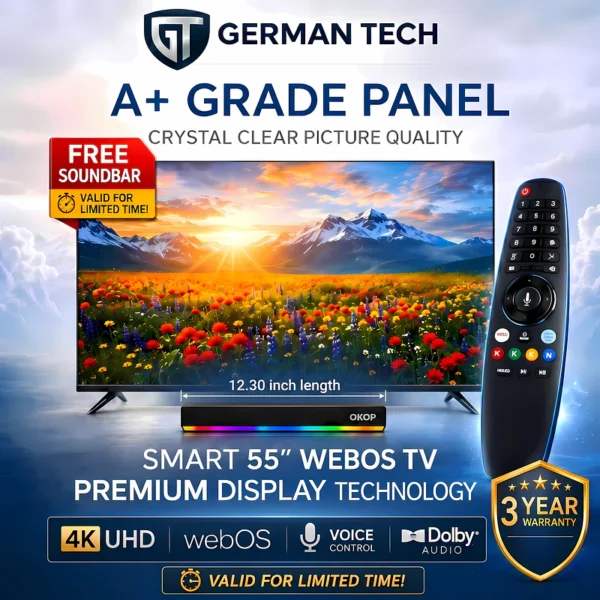
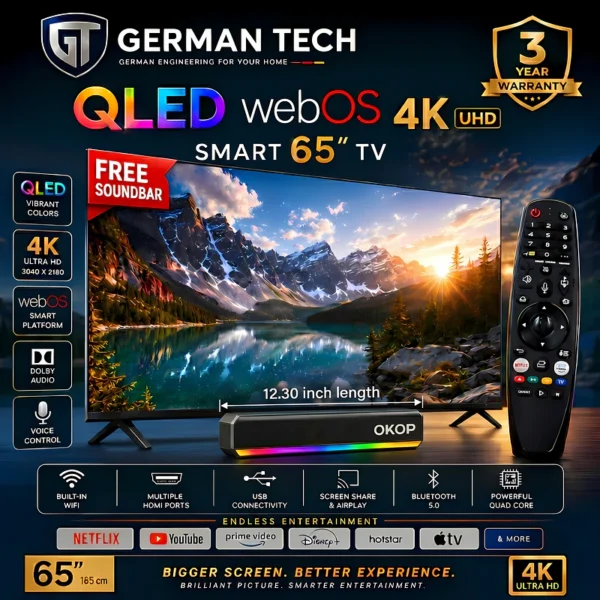
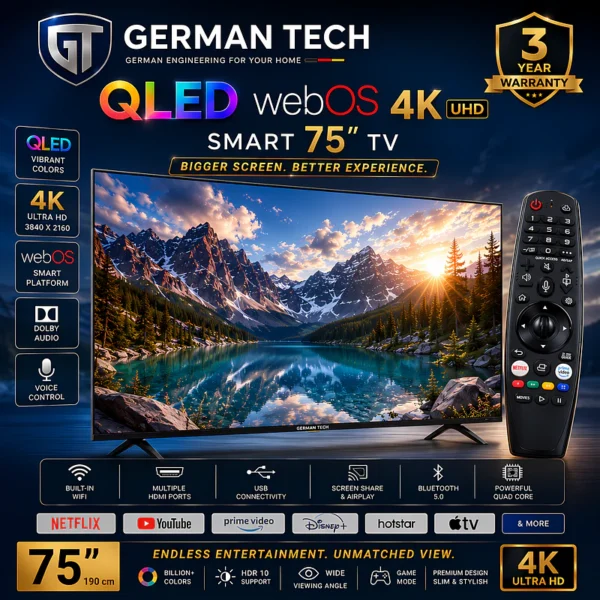
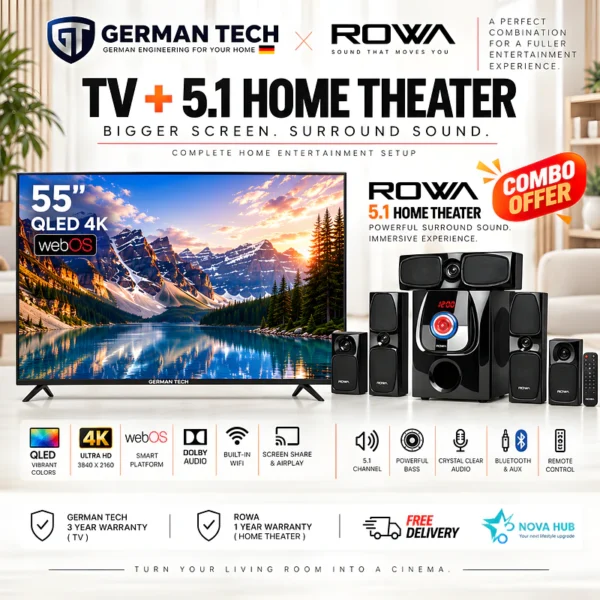
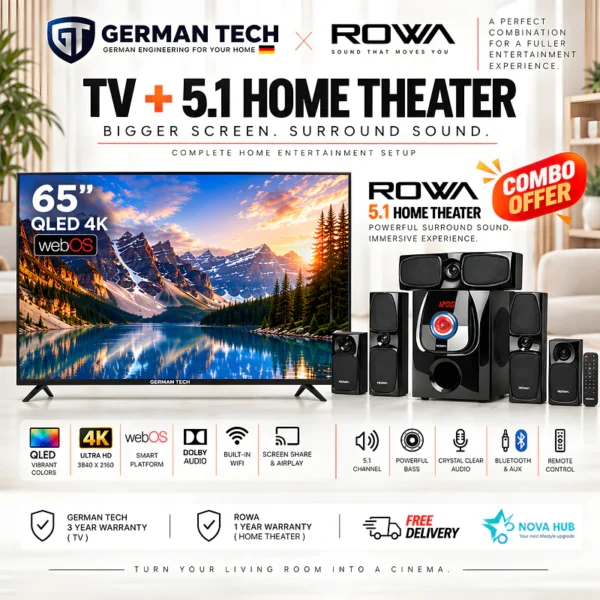
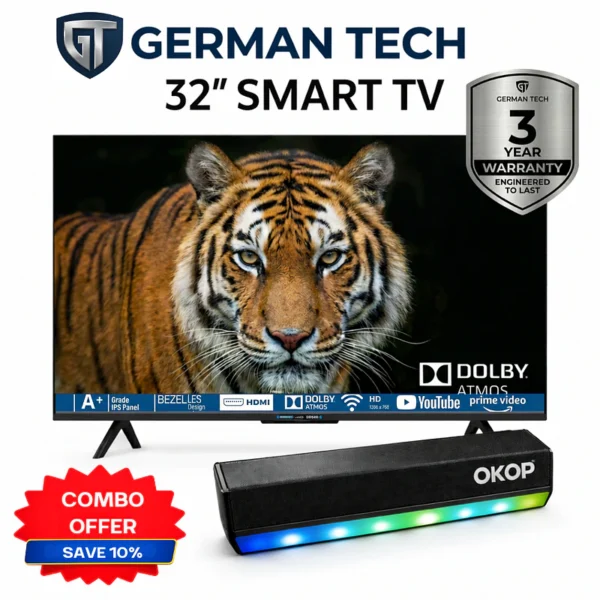
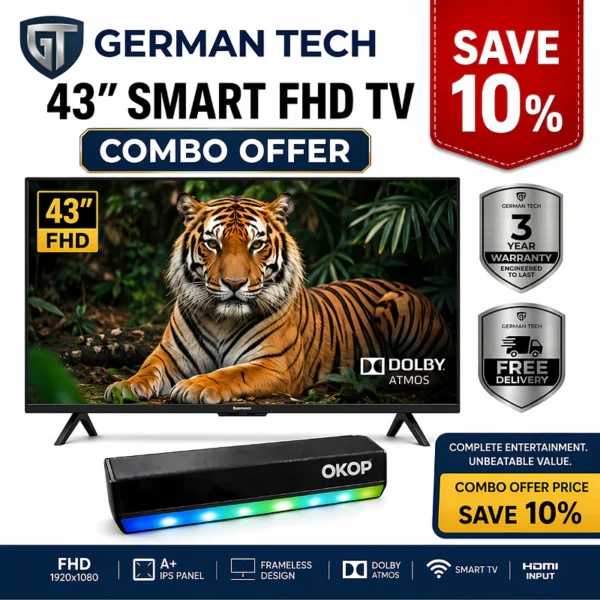
Now that you understand the key differences between LED, QLED and OLED TVs, you can explore the available models at Nova Hub and compare their screen size, display technology, smart features and other specifications.
What Is an LED TV?
LED TV is the most familiar option among the three. It uses small lights behind the screen to produce the picture you see. This type of TV has been around for years and is available in many screen sizes and price ranges.
Because of its wide availability and reasonable price, LED TVs remain a popular choice for everyday home entertainment.
Why Should You Buy an LED TV?
- More affordable: LED TVs come in different price points, making them a practical choice for buyers with different budgets.
- Good brightness: LED TVs can work well in rooms with plenty of natural or artificial light.
- Wide range of options: You can find LED TVs in many screen sizes with features such as 4K, HDR, smart TV apps, and different refresh rates.
- Good for everyday viewing: If you mainly watch TV channels, YouTube, movies, sports, and other entertainment, a good LED TV can provide a great viewing experience.
What Are the Limitations of LED TVs?
The main limitation of LED TVs is that they use lights behind the screen. These lights cannot be completely turned off for each part of the picture. Because of this, black areas may not look completely black, especially in dark scenes. They can sometimes appear slightly grey, and you may notice less detail or contrast in very dark scenes.
However, this does not mean LED TVs have poor picture quality. A good LED TV can still provide a clear, bright, and enjoyable viewing experience, especially for everyday watching.
What Is a QLED TV?
QLED TVs are similar to LED TVs, but they use an extra layer that helps improve colour and brightness. This allows QLED TVs to produce brighter images and more vibrant colours than many standard LED TVs
QLED TVs are a good middle option if you want better picture quality than a basic LED TV but do not want to choose an OLED TV.
Why Should You Buy a QLED TV?
- High brightness: QLED TVs can get very bright, making them a good choice for rooms with lots of daylight.
- Rich and vibrant colours: QLED TVs can produce bright and vivid colours, which can make movies, sports, and shows look more lively.
- Good for everyday entertainment: Their brightness and colour make QLED TVs well-suited for sports, YouTube, movies, TV shows, and other everyday content.
- No typical OLED burn-in concern: QLED TVs don’t have the same burn-in concern as OLED TVs, which can help people who regularly watch content with fixed logos or other elements on the screen.
What Are the Limitations of QLED TVs?
QLED TVs still use lights behind the screen. Because of this, they cannot usually make each part of the screen completely black like an OLED TV can.
This means OLED TVs generally have better blacks and contrast, especially when watching movies in a dark room. However, a good QLED TV can still provide excellent picture quality, particularly if you watch TV in a bright room and want strong brightness and vibrant colours.
What Is an OLED TV?
OLED TVs work differently compared to LED and QLED TVs. Instead of relying on lights behind the screen, each pixel can produce its own light. When a part of the picture needs to be black, those pixels can turn off completely.
This gives OLED its biggest advantage: deep blacks and excellent contrast.
Why Should You Buy an OLED TV ?
- Deep blacks: OLED can turn off individual pixels completely, allowing dark parts of the picture to look truly black.
- Excellent contrast: Deep blacks combined with bright parts of the image create a more detailed and realistic picture, especially in dark scenes.
- Great viewing angles: The picture generally stays clear and consistent even when you watch the TV from the side.
- Smooth motion: OLED TVs handle fast-moving scenes well, making them a good choice for sports and gaming.
- Excellent for movies: If you enjoy movies and often watch them in a darker room, OLED can provide a more cinematic viewing experience.
What Are the Limitations of OLED TVs?
- Higher price: OLED TVs are generally more expensive than standard LED TVs, so they may not suit every budget.
- Possible burn-in: OLED TVs can develop permanent marks if the same image or logo stays on the screen for very long periods. Modern OLED TVs have features that help reduce this risk, but it is still worth considering if you regularly watch content with the same fixed elements.
- Not always ideal for very bright rooms: OLED TVs can look excellent in many rooms, but if your room receives a lot of direct sunlight and you want the brightest possible picture, a good QLED TV may be a better choice.
How Are LED, QLED and OLED TVs Different?
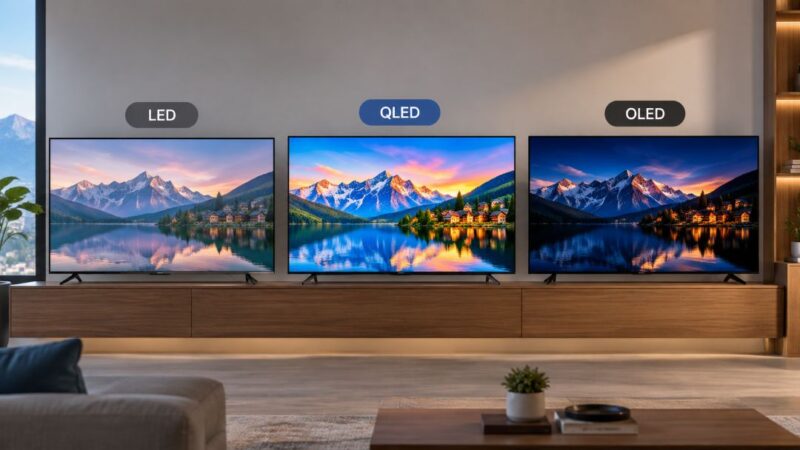
The easiest way to understand the difference is to look at how each TV creates light and displays the picture.
- LED TV: Uses lights behind the screen to create the picture.
- QLED TV: Works similarly to an LED TV but uses an additional layer to produce brighter images and more vibrant colours.
- OLED TV: Each pixel produces its own light and can turn off completely when showing black.
This difference affects what you see on the screen, including black levels, contrast, brightness, colours, viewing angles, and overall picture quality.
OLED vs QLED: Which Is Better?
If you are choosing between OLED and QLED, neither is the best choice for everyone. The better option depends on where you watch TV and what matters most to you.
OLED Is Usually Better For:
- Watching movies and cinematic content
- Dark or dimly lit rooms
- Deep blacks and strong contrast
- Watching TV from different angles
- Getting the best possible picture quality
- Gaming and other fast-moving content
QLED Is Usually Better For:
- Bright rooms with lots of daylight
- Sports and live TV
- People who prefer a very bright picture
- Family rooms where people watch from different places
- Buyers who want strong picture quality without paying for an OLED TV
In simple terms, choose OLED if picture quality and deep blacks are your top priorities. Choose QLED if you care more about brightness and an all-round viewing experience, especially in a bright room.
QLED vs LED: What Is the Difference?
QLED and LED TVs work similarly, but QLED TVs use an additional layer that improves brightness and colour.
As a result, a good QLED TV can produce brighter images and more vibrant colours than many standard LED TVs. However, this does not mean that every QLED TV will be better than every LED TV.
A good-quality LED TV can still provide an excellent viewing experience. So, do not choose a TV based only on the QLED or LED label. The quality of the specific TV, its picture settings, brightness, features, and overall build also matter. If you want a more affordable TV for everyday viewing, LED can be the more practical choice. If you want stronger brightness and richer colours, QLED may be worth considering.
OLED vs LED: Which One Is Better?
OLED generally has the advantage in black levels, contrast, viewing angles, and overall picture quality.
However, LED remains a practical choice for many households. If you mainly watch TV channels, YouTube, movies, sports, and streaming services and do not want to spend more on premium picture quality, a good LED TV can meet your needs. If you want the best picture quality and are comfortable paying more, OLED is the stronger choice. If you want a good TV for everyday entertainment at a more practical price, LED makes more sense. For a broader comparison of these display technologies, see our guide to QLED vs LED TVs.
Which TV Technology Is Best for a Bright Room in Nepal?
For a bright living room, QLED can be a strong choice because of its high brightness. This is especially useful when sunlight or strong indoor lighting enters the room.
A good LED TV can also work well in a bright room, especially if you want to keep your budget under control. OLED can still perform well in bright rooms, but if maximum brightness is one of your biggest priorities, a good QLED or advanced LED model may be worth considering.
Which TV Is Best for Movies and Gaming?
If you enjoy both movies and gaming, OLED is generally the best choice. Its deep blacks, strong contrast, and fast response make both dark movie scenes and fast-moving games look better. QLED is a strong alternative if you use your TV in a bright room, while LED is a practical option if you want good performance at a lower cost.
| TV Type | Movies | Gaming | Best For |
| OLED | Excellent | Excellent | Best overall picture and gaming |
| QLED | Very Good | Very Good | Bright rooms and vibrant colours |
| LED | Good | Good | Everyday viewing and lower budgets |
Is OLED Worth It in Nepal?
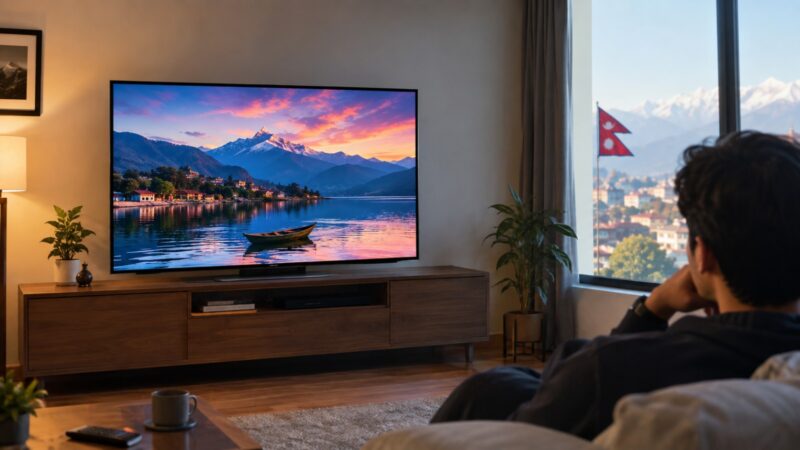
OLED can be worth considering if you want premium picture quality and are comfortable with the higher cost. However, the right TV for a Nepali household is not necessarily the most expensive technology available. Availability, warranty, service support and the actual TV model should also be considered.
If OLED models are difficult to find within your preferred budget or do not offer the support you want, a good QLED or LED TV can be a more practical purchase. The key is to choose the technology that fits your room and viewing habits, rather than buying OLED simply because it is considered more premium.
Which TV Technology Is Right for You?
The right choice between OLED, QLED, and LED depends mainly on how you use your TV and where you place it. Instead of focusing only on the technology name, think about your room, viewing habits, and how much you want to spend.
Choose OLED If Picture Quality Comes First
OLED is a strong choice if you want deep blacks, excellent contrast, and premium picture quality. It is particularly well suited to movie lovers and people who often watch TV in a darker room. OLED is also a great option for gaming because of its fast response and smooth performance.
Choose QLED If You Watch TV in a Bright Room
QLED can be a better fit for rooms with lots of daylight. Its strong brightness and vibrant colours make movies, sports, TV shows, and other content easy to see even when the room is well lit.
Choose LED If You Want a Practical Option
LED is often the sensible choice if you want a good TV without spending more on premium display technology. There are many LED TVs available in different sizes and features, making them suitable for everyday viewing such as TV channels, YouTube, movies, and streaming.
Think About Your Viewing Habits
Your usual content can also help narrow down the choice. If you watch mostly movies in the evening, OLED may be worth considering. If your family watches sports and TV during the day, QLED can be a better fit. If you mainly want a reliable TV for everyday entertainment, LED may be all you need.
Consider Availability and Support in Nepal
For buyers in Nepal, don’t overlook warranty, availability, and after-sales support. A TV may look attractive on paper, but reliable service can matter just as much after the purchase, especially when choosing a more expensive model.
Quick Choice
| If You Want | Consider |
| The best overall picture quality | OLED |
| A TV for a bright room | QLED |
| A premium movie experience | OLED |
| Bright and vibrant colours | QLED |
| A practical everyday TV | LED |
| A more budget-friendly option | LED |
Which TV Technology Should You Choose?
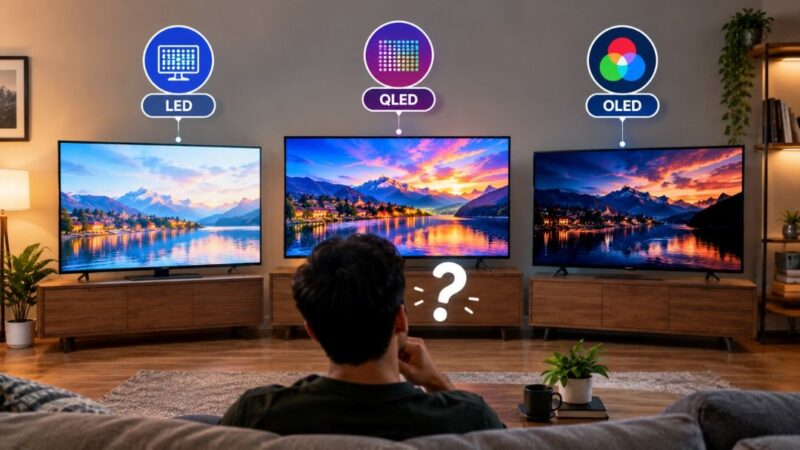
OLED, QLED and LED TVs each have their own strengths, so the best choice depends on how you plan to use your TV. If your priority is the best possible picture quality, deep blacks and a great movie-watching experience, OLED is the strongest option.
If you have a bright room and want a combination of high brightness, vibrant colours and strong picture quality, QLED can be a better fit. For everyday entertainment and a more affordable option, LED TVs can still offer a practical balance of features and performance.
Rather than choosing a TV simply because one display technology is considered better, consider your room brightness, viewing distance, screen size, watching habits, and budget. These factors can have a bigger impact on your overall experience than the display technology alone. For more help choosing the right TV, check out our complete TV buying guide in Nepal, where we cover the key factors to consider before buying.
If you are planning to buy a TV in Nepal, explore Nova Hub and compare models based on screen size, display technology, features, connectivity and warranty. The best TV is the one that fits your room, viewing needs and budget.
Frequently Asked Questions
1. Which is better, OLED, QLED or LED?
OLED is generally best for picture quality, deep blacks and contrast. QLED is a strong choice for bright rooms and high brightness, while LED is usually the more affordable option for everyday viewing. The best choice depends on your room, viewing habits and budget.
2. Is OLED better than QLED?
OLED is generally better for deep blacks, contrast, viewing angles and premium picture quality. QLED can be better for bright rooms because it can produce higher brightness. Neither is the best choice for every situation.
3. Is QLED better than LED?
QLED generally offers better brightness, colours and picture quality than standard LED TVs. However, a good LED TV can still provide excellent everyday performance and may be a better choice if affordability is your priority.
4. Which TV is best for a bright room?
QLED is generally a strong choice for a bright room because of its high brightness. It can handle daylight and strong indoor lighting better than many standard TVs, making it suitable for bright living rooms.
5. Which TV is best for movies and gaming?
OLED is generally the best choice for movies and gaming because of its deep blacks, strong contrast and fast response. QLED is also a good option, especially if you use the TV in a bright room.


