11.11 Campaign Crazy offers on all products upto 33%, Limited Time Offer t&c Apply


How to Choose the Best Geyser in Nepal: A Complete Buying Guide


Last updated:
As winter sets in across Nepal, having a reliable supply of hot water becomes an important part of everyday life. From cold mornings in Kathmandu to chilly winter days in Pokhara, a good geyser makes bathing and other household activities much more comfortable.
Choosing the best geyser in Nepal depends on your household size, daily hot water requirements, available energy source, and installation space. Options such as electric storage, instant electric, gas, and solar geysers offer different benefits, so it’s important to understand their features before buying.
But which type of geyser is right for your home? How much capacity does your family need, and what features should you check before buying? This guide covers the different types of geysers available in Nepal, their advantages, capacity options, and the key factors to consider when choosing the right geyser for your home.
What Are the Different Types of Geysers Available in Nepal?
The main types of geysers available in Nepal include electric storage geysers, instant electric geysers, gas geysers, and solar water heaters. Each type uses a different heating method and serves different household requirements. Before choosing one, understand how each system works and where it fits best.
1. Electric Storage Geyser
An electric storage geyser heats water using an internal heating element and stores it in an insulated tank until you need it. It is a common choice for households that regularly need hot water for bathing and other daily activities. Once you use the stored water, the geyser needs time to heat another batch.
Key features:
- Stores heated water for later use.
- Available in different tank capacities.
- Suitable for households with regular hot-water needs.
- Insulation helps maintain water temperature.
- Can supply hot water for multiple uses, depending on tank capacity and usage.
Best for: Families that need a regular supply of hot water, particularly during colder months.
Looking for a reliable electric storage geyser for your home? Explore the available options at Nova Hub and compare their tank capacity, heating features and specifications to find the right model for your household.
-

Hitech Malaysia 15 Ltr Square Electric Water Heater Geyser – Instant Plus Electric Water Heater Geyser
Price range: ₨13,500 through ₨14,000 -37% Saved ₨ 8,388 -

Hitech Malaysia Aqua Series 10/15/25 Ltr Electric Water Heater Geyser – Aqua Series 10 Ltr Electric Water Heater Geyser
Price range: ₨11,990 through ₨15,990 -33% Saved ₨ 7,890 -

Hitech Malaysia Coral Series 15/25 Ltr Square Type Storage Water Heater Geyser – Coral Series Square Type Storage Water Heater Geyser
Price range: ₨16,000 through ₨17,000 -37% Saved ₨ 9,850 -

Hitech Malaysia Instant Plus 3/6 ltr Instant Electric Water Heater Geyser – Instant Plus Electric Water Heater Geyser
Price range: ₨8,247 through ₨9,278 -31% Saved ₨ 4,154 -

Hitech Malaysia Wave Series 15 Litre Round Electric Water Geyser – Hitech Wave Series Round Electric Water Geyser HRT-15LSST
Price range: ₨10,500 through ₨12,500 -36% Saved ₨ 6,902
2. Instant Electric Geyser
An instant geyser heats water as it flows through the unit rather than storing it in a large tank. It is generally smaller than a storage geyser and can provide hot water quickly once switched on. However, its heating performance depends on the heating element, water flow rate, and incoming water temperature.
Key features:
- Compact design.
- No large water storage tank.
- Heats water when required.
- Suitable for limited installation spaces.
- Requires an appropriate electrical connection.
Best for: Small households, kitchen use and situations where hot water is needed for shorter periods.
3. Gas Geyser
A gas geyser uses LPG or another compatible gas supply to heat water. When water flows through the unit, the burner heats it before delivering it through the outlet. Gas geysers can be useful in homes where an appropriate gas supply is available, and electricity use needs to be reduced.
Key features:
- Uses gas rather than an electric heating element.
- Heats water on demand.
- Does not require a large storage tank.
- Requires proper ventilation and professional installation.
- Needs regular inspection of gas connections and safety components.
Best for: Households with a suitable gas supply and a properly ventilated installation location.
Gas geysers should never be installed in an enclosed bathroom without suitable ventilation. Carbon monoxide exposure can be dangerous or fatal. Always follow the manufacturer’s installation requirements and use a qualified technician.
4. Solar Water Heater
A solar water heater uses energy from sunlight to heat water. The system generally includes solar collectors, an insulated storage tank, and connecting pipes. It can reduce dependence on electricity or gas for water heating when sufficient sunlight is available.
Key features:
- Uses solar energy as its primary heating source.
- Stores heated water for later use.
- Can reduce conventional energy consumption.
- Requires suitable rooftop or outdoor installation space.
- Heating performance depends on sunlight and weather conditions.
Best for: Homes with suitable rooftop space and regular access to sunlight.
During cloudy weather or periods of limited sunlight, heating performance may decrease. Some systems include an electric backup heater for these situations.
Which Is Better: Instant or Storage Geyser?
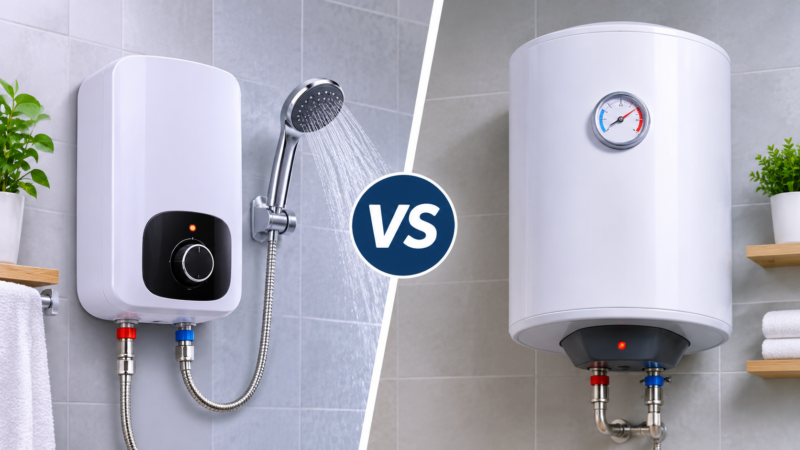
A storage geyser is generally better for households that need larger quantities of hot water, while an instant geyser is suitable for smaller requirements and limited spaces. The right choice depends on how many people use hot water, how frequently they need it, and how much space is available for installation.
| Comparison | Instant Geyser | Storage Geyser |
| Heating method | Heats water as it flows | Heats and stores water |
| Water storage | No large storage tank | Has an insulated tank |
| Hot water availability | On-demand, within its rated capacity | Available from stored hot water |
| Installation space | Generally compact | Requires more space |
| Household suitability | Smaller requirements | Regular family use |
| Continuous usage | Depends on rated heating capacity and flow | Depends on stored capacity and recovery time |
| Best application | Kitchen and limited hot water use | Bathing and regular household use |
Which one should you choose?
Choose an instant geyser if you need hot water for a short period, have limited installation space, or have relatively low daily hot water requirements.
Choose a storage geyser if several family members need hot water, especially for bathing. Its stored water supply can be more convenient when multiple people use hot water throughout the day.
Gas Geyser vs Electric Geyser: Which Should You Buy?
An electric geyser is generally a practical choice for households with a suitable electrical connection, while a gas geyser may suit homes with a reliable LPG supply and appropriate ventilation. Both systems can provide hot water, but their installation requirements, energy sources, and safety considerations are different.
| Factors | Electric Geyser | Gas Geyser |
| Energy source | Electricity | LPG or compatible gas |
| Heating method | Electrical heating element | Gas burner |
| Water storage | Available in storage models | Usually heats water on demand |
| Installation | Requires a suitable electrical connection | Requires gas connection and proper ventilation |
| Maintenance | Electrical and tank inspection | Gas connection, burner and ventilation inspection |
| Main consideration | Electrical safety and energy consumption | Gas safety and carbon monoxide prevention |
When Should You Choose an Electric Geyser?
An electric geyser may be a suitable option if:
- Your home has a reliable electrical connection.
- You prefer a storage system for regular bathing.
- You want to avoid managing an LPG connection.
- You have suitable installation space.
- You can arrange proper electrical protection and earthing.
When Should You Choose a Gas Geyser?
A gas geyser may be suitable if:
- Your household has a compatible LPG supply.
- You want on-demand water heating.
- You have an appropriate outdoor or properly ventilated installation location.
- A qualified technician can install and maintain the system safely.
For Nepalese households, the choice should also consider local electricity availability, LPG supply arrangements and installation conditions. Don’t choose a gas geyser just because it doesn’t use electricity. Poor ventilation and incorrect installation create serious safety risks.
What Geyser Capacity Is Best for Your Family?
The best geyser capacity depends on your household size, bathing habits, water usage, and the time between uses.
For electric storage geysers, common capacities include 10, 15, 25 and 30 liters. Smaller instant and gas geysers follow different capacity specifications, so you should not compare their ratings directly with storage tank sizes. Here is a general guide to help you choose the capacity that suits your household.
| Geyser Capacity | Suitable Household Requirements |
| 10 litres | Small households or limited hot water requirements |
| 15 litres | Individual use or smaller households |
| 25 litres | Families with moderate hot water requirements |
| 30 litres | Larger households or higher hot water requirements |
These are general starting points, not fixed household rules. Actual requirements depend on shower duration, water temperature, incoming water temperature and how much hot water is used at once.
What Factors Should You Consider Before You Buy a Geyser in Nepal?

Before buying a geyser in Nepal, consider your household requirements, heating technology, capacity, energy consumption, water quality, safety features, and after-sales service. A geyser that works well in one home may not suit another. Here are the key factors to check before you buy.
1. Household Size and Daily Hot Water Requirements
Consider how many people will use the geyser and how frequently they need hot water. A single person may need less capacity than a family of five. Choose a geyser that matches your daily usage rather than automatically selecting the largest model.
2. Heating Technology
Choose between instant, storage, gas or solar geysers based on your household needs. Consider your available energy source, installation space and hot water requirements. Storage geysers are suitable for regular family use, while instant models work well for smaller requirements.
3. Energy Efficiency
Since geysers are used frequently during winter, energy efficiency is important. When comparing electric models, look for:
- Good tank insulation.
- Efficient heating elements.
- Accurate thermostat control.
- Automatic temperature regulation.
- Suitable heating capacity.
Good insulation helps reduce heat loss and unnecessary reheating.
4. Tank Material and Corrosion Protection
The inner tank directly affects a storage geyser’s durability. Before purchasing, check for:
- Corrosion-resistant tank materials.
- Protective inner tank coating.
- Suitable anode rod or corrosion protection, where applicable.
- Manufacturer warranty for the tank.
These features can help protect the tank and support long-term performance.
5. Water Quality and Hard Water Compatibility
Hard water can cause mineral deposits to build up inside the tank and around the heating element, affecting heating performance over time. If your home receives hard water, look for suitable scale protection and follow the manufacturer’s maintenance recommendations.
6. Electrical Requirements and Voltage Protection
Before installing an electric geyser, check its voltage, wattage, wiring requirements and circuit protection. If your area experiences voltage fluctuations, consult an electrician about suitable protection. Avoid using unsuitable sockets or extension cords for high-power appliances.
7. Safety Features
Always check the geyser’s safety features before purchasing. Important features include:
- Thermostat for temperature regulation.
- Thermal cut-out for overheating protection.
- Pressure relief valve.
- ELCB or suitable residual-current protection.
- Proper electrical earthing.
For gas geysers, ensure proper ventilation, safe gas connections, and professional installation.
8. Warranty and After-Sales Service
A geyser requires proper maintenance and occasional servicing. Before buying, check the product warranty, tank and heating element coverage, availability of spare parts, installation support, and access to authorized service centers. Reliable after-sales support makes long-term ownership easier.
How Much Electricity Does an Electric Geyser Consume?
An electric geyser’s electricity consumption depends on its wattage, operating time, water temperature, tank insulation, and how often you use hot water. A higher-wattage heating element generally heats water faster under comparable conditions, but it also draws more power while operating.
For example, a geyser with a 2,000-watt heating element uses 2 kilowatt-hours of electricity if the element operates continuously for one hour. However, this does not mean every geyser consumes that amount every hour. The thermostat switches the heating element on and off to maintain the selected temperature, and actual consumption depends on usage.
What Affects Geyser Electricity Consumption?
Several factors influence how much electricity an electric geyser uses:
- Heating element wattage: Higher wattage generally heats water faster but draws more power while operating.
- Water temperature: Colder incoming water requires more energy to reach the desired temperature.
- Tank insulation: Good insulation reduces heat loss and unnecessary reheating.
- Frequency of use: Frequent hot water use increases the amount of water that needs reheating.
- Thermostat settings: Higher temperature settings can increase energy consumption and the risk of scalding.
How Can You Reduce Geyser Electricity Consumption?
You can manage electricity consumption by following a few practical habits:
- Choose a geyser capacity that matches your household requirements.
- Avoid keeping the temperature unnecessarily high.
- Switch off the geyser when you won’t need it for extended periods, following the manufacturer’s instructions.
- Check the tank insulation and heating performance regularly.
- Fix leaking hot water pipes and taps.
- Maintain the geyser according to the manufacturer’s recommendations.
The goal is not simply to buy a low-wattage geyser. It is to choose an appropriate system and use it efficiently.
How Can You Use a Geyser Safely During Winter?
Geysers are generally safe to use during winter when properly installed and maintained. However, increased usage during colder months makes it important to follow basic safety precautions.
Here are some tips to use your geyser safely:
- Check electrical connections: Ensure proper earthing and suitable circuit protection to reduce the risk of electric shock.
- Avoid overheating: Use the recommended thermostat settings to prevent excessively hot water and accidental burns.
- Check the pressure valve: Make sure the pressure relief valve is working properly and never block or remove it.
- Watch for leaks or unusual sounds: Stop using the appliance and arrange professional inspection if you notice any problems.
- Ensure proper ventilation: Gas geysers must have adequate ventilation to prevent dangerous carbon monoxide buildup. Never use an improperly installed gas geyser in an enclosed bathroom.
- Schedule regular maintenance: Check the tank, heating element, valves and electrical connections according to the manufacturer’s recommendations.
Following these precautions can help keep your geyser safe and reliable throughout the winter season.
Where Can You Buy a Geyser in Nepal?

You can buy a geyser in Nepal from established electronics retailers, home appliance stores, and trusted online sellers. However, choosing the right seller is just as important as selecting the right model. Always check product authenticity, warranty coverage, installation support, and after-sales service before purchasing. Before buying a geyser, make sure to check:
- Product authenticity: Choose genuine products from recognized manufacturers.
- Capacity and features: Select a model that matches your household’s hot water requirements.
- Warranty: Check the warranty coverage for the tank and heating components.
- Installation: Confirm whether professional installation is available.
- After-sales service: Check the availability of maintenance and replacement parts.
- Delivery: Confirm delivery availability in your location.
Explore the options at Nova Hub to find a geyser that suits your home. Choose a model based on its specifications, safety features, and long-term reliability rather than appearance or brand name alone.
-
Hitech Malaysia 15 Ltr Square Electric Water Heater Geyser – Instant Plus Electric Water Heater Geyser
Price range: ₨13,500 through ₨14,000 -37% Saved ₨ 8,388 -
Hitech Malaysia Aqua Series 10/15/25 Ltr Electric Water Heater Geyser – Aqua Series 10 Ltr Electric Water Heater Geyser
Price range: ₨11,990 through ₨15,990 -33% Saved ₨ 7,890 -
Hitech Malaysia Coral Series 15/25 Ltr Square Type Storage Water Heater Geyser – Coral Series Square Type Storage Water Heater Geyser
Price range: ₨16,000 through ₨17,000 -37% Saved ₨ 9,850 -
Hitech Malaysia Instant Plus 3/6 ltr Instant Electric Water Heater Geyser – Instant Plus Electric Water Heater Geyser
Price range: ₨8,247 through ₨9,278 -31% Saved ₨ 4,154 -
Hitech Malaysia Wave Series 15 Litre Round Electric Water Geyser – Hitech Wave Series Round Electric Water Geyser HRT-15LSST
Price range: ₨10,500 through ₨12,500 -36% Saved ₨ 6,902
Frequently Asked Questions About Geysers in Nepal
1. Which Geyser Is Best for Home Use in Nepal?
An electric storage geyser is a practical choice for many households in Nepal because it stores hot water for regular bathing and household use. However, an instant, gas, or solar geyser may be more suitable depending on your energy source, household size, and installation conditions.
2. Is an Instant Geyser Better Than a Storage Geyser?
An instant geyser suits smaller hot water needs and limited installation space, while a storage geyser is generally better for households that need larger quantities of hot water. Your daily usage should determine which type you choose.
3. How Many Liters of Geyser Are Suitable for a Family of Four?
A 25-liter storage geyser can be a reasonable starting point for a family of four with moderate hot water requirements. However, the ideal capacity depends on bathing habits, the number of consecutive users and the incoming water temperature.
4. Does an Electric Geyser Consume a Lot of Electricity?
Electricity consumption depends on the geyser’s wattage, heating time, water temperature, insulation, and frequency of use. Choosing the right capacity and setting the thermostat appropriately can help manage consumption.
5. Which Is Safer, a Gas Geyser or an Electric Geyser?
Both gas and electric geysers can be safe when correctly selected, installed and maintained. Electric models require proper earthing and electrical protection, while gas models need safe gas connections and adequate ventilation to prevent carbon monoxide exposure.
6. Can a Geyser Work With Hard Water?
Yes, many geysers can operate with hard water, but mineral deposits may accumulate inside the tank and heating components over time. Choose a model with suitable corrosion and scale protection, and follow the manufacturer’s maintenance recommendations.