
Blog
Washing Machine in Nepal: Complete Buying Guide, Prices & Best Models (2026)

Are you looking for the best washing machine in Nepal but not sure where to start? You are not alone.
In today’s busy lifestyles, more Nepali families are replacing traditional handwashing with washing machines to save time and make laundry easier. With so many models available, choosing the right one is important. A quality washing machine can improve your daily routine, reduce manual effort, and serve your household reliably for years.
In this guide, you will learn everything you need to know to choose the right washing machine in Nepal, including types, capacities, key features, and practical buying tips.
Why are washing machines being purchased more in Nepali Family
The use of washing machines has become quite common in many Nepali households nowadays. A luxury item that was once out of reach for many has become a necessary household device. There are several reasons why the demand for washing machines in Nepal has accelerated. Some of the reasons are:
- Urban lifestyle: Apartment residents in the Kathmandu Valley no longer have courtyard space or time for daily handwashing.
- Working families: Dual-income households need laundry to happen in the background, not in the foreground.
- Rising income: As disposable income has grown, washing machines have moved from a luxury to a necessity for the middle class.
- Better electricity: Nepal Electricity Authority has significantly reduced scheduled load shedding in urban areas. More reliable power means more households can depend on fully automatic machines.
- Water efficiency: The amount of water used by modern machines, such as front-loading washing machines and BLDC top-loading machines, is much less than that required to wash the same clothes manually.
- Time-saving benefits: A full wash cycle in a fully automatic washing machine takes 45–60 minutes with zero manual effort. Hand washing the same load takes two to three hours.
The result: washing machines are now among the fastest-growing home appliances in Nepal, alongside refrigerators and air conditioners.
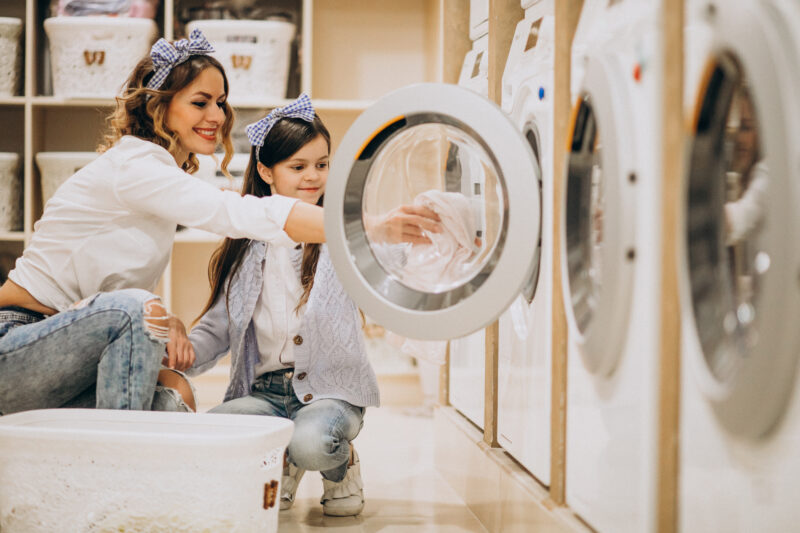
Types of Washing Machines Available in Nepal
Not all washing machines are built the same way. The Nepali market offers a wide range of washing machines from popular brands such as LG, Samsung, Haier, CG, Midea, Panasonic, Beko, Hisense, Hitech Malaysia, and German Tech. These models are available in different types, capacities, and price ranges to suit various household needs and budgets. Broadly, washing machines in Nepal can be categorized into three main types, each with its own advantages, price point, and ideal user.
- Semi-Automatic Washing Machines
A semi-automatic washing machine generally has two separate tubs, one for washing and one for spinning. You manually fill the wash tub with water, set the wash timer, and, once the cycle is done, move the clothes by hand to the spin tub.
Pros:
- Most affordable entry point; prices start from NPR 20,000-32,000
- Works even during partial power cuts because water is manually controlled
- Lower electricity consumption than fully automatic models
- Simple mechanics mean local repair is easy and cheap
- Can wash one batch while spinning another simultaneously
Cons:
- Requires active supervision; you cannot simply walk away
- Manual effort involved in moving clothes between tubs
- No automatic rinse or soak programs
- Takes up more floor space due to the dual-tub design
- Rougher on delicate fabrics compared to front-load machines
Best for: Budget-conscious buyers, households in areas with frequent power disruptions, and families who want a reliable basic machine for daily use without a high upfront cost.
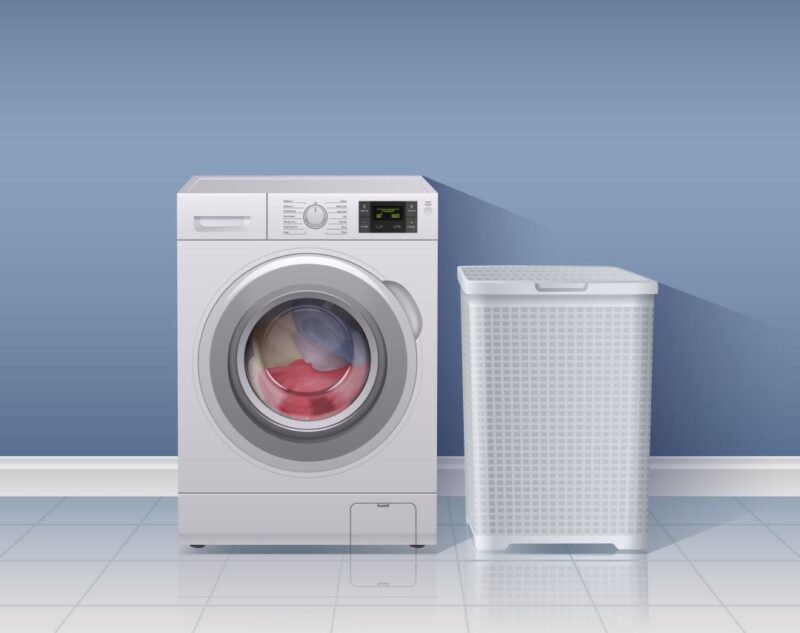
- Fully Automatic Top-Load Washing Machines
Top-load fully automatic washing machines are the most popular type in Nepal, accounting for the majority of washing machine sales in urban areas. You load clothes from the top, select a program, and the machine handles everything, washing, rinsing, and spinning automatically.
Advantages:
- No manual supervision required, genuinely set and forget
- Shorter cycle times than front-load machines (typically 35–50 minutes)
- Easy to add forgotten clothes mid-cycle by simply lifting the lid
- Lower purchase price than front-load models for equivalent capacity
- Works better in areas with hard water because extra rinse water helps wash away mineral buildup.
- Stainless steel tubs on quality models resist mineral build-up over 8-10 years
Energy use: Conventional top-load machines consume 400–600 watts per cycle. However, models fitted with BLDC inverter motors use 30–50% less electricity, which adds up to real savings on your NEA electricity bill each month.
Maintenance: Top-loaders washing machine have an easier design inside compared to front-loaders, since door seals, drum bearings, and pumps can be easily accessed.
Best users: Families of 3-6 people, households that do laundry several times a week, buyers who want convenience without the premium price of a front-loader, and anyone in areas with hard water.
- Front-Load Washing Machines
Front-load washing machines load from the front via a horizontal drum. They use a tumbling action rather than an agitator, which is gentler on fabrics and uses significantly less water and electricity per cycle than most top-load machines.
Front loaders generally provide superior cleaning capabilities and are best suited for those who value fabric care, energy savings, or washer-dryer stacking.However,they do come at a higher initial cost.
Washing Machine Capacity Guide
Selecting the wrong capacity is one of the most common and most expensive mistakes Nepali buyers make. Too small, and you are running multiple cycles daily. Too large, and you are wasting electricity on half-empty drums.
Use this table as your starting point:
| Family Size | Recommended Capacity | Suitable For |
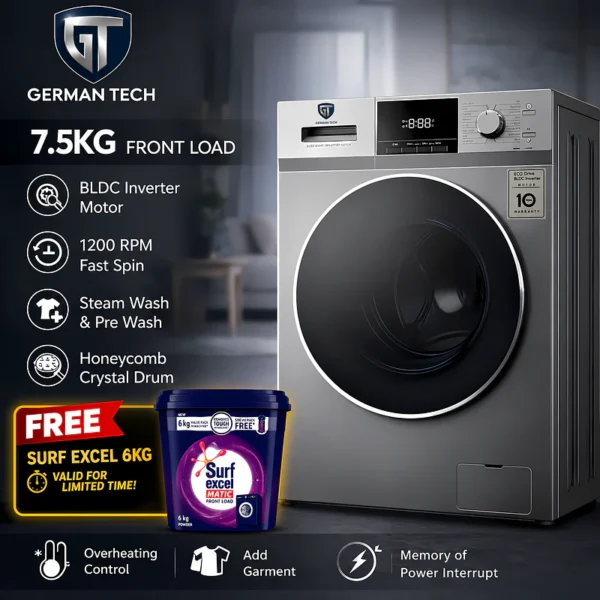
| 1–2 people | 7–7.5 KG | Couples, single professionals |
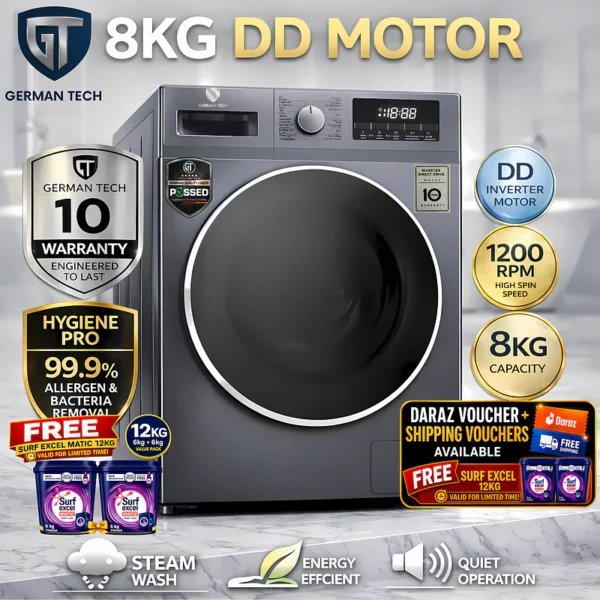
| 3–4 people | 8 KG | Small family with regular laundry |
| 4–5 people | 9 KG | Medium family, includes bedsheets |
| 5–6 people | 10 KG | Larger household with heavy loads |
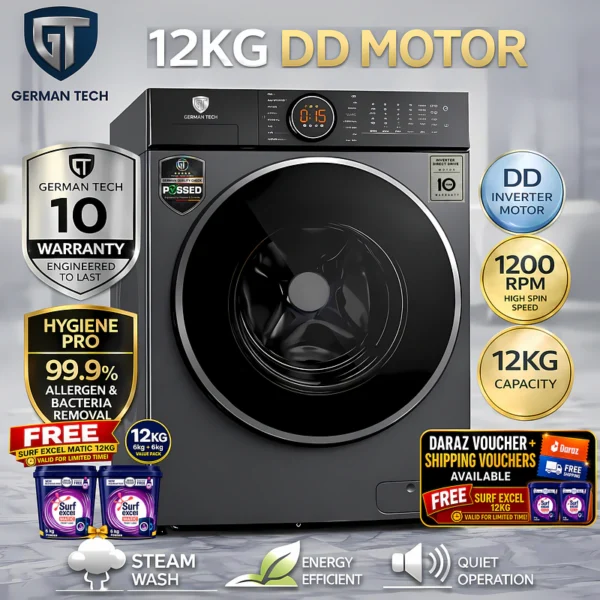
| 6+ people | 12 KG | Large households, joint families |
A few practical notes:
- If you wash daily or every other day, choose a capacity that matches your current family size.
- If you wash twice a week or less, size up by one step; clothes accumulate.
- If you regularly wash blankets, quilts, or heavy winter wear, add 1–2 kg to your ideal capacity.
- For Kathmandu apartments with limited bathroom space, check the machine’s physical dimensions before purchasing a 10 KG top-loader, which is significantly wider than a 7.5 KG model.
How to Choose the Right Washing Machine in Nepal
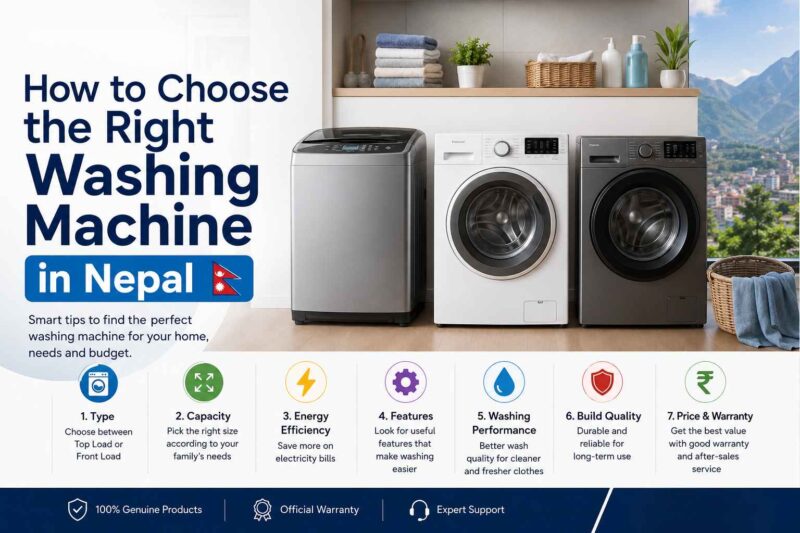
Nepal has unique conditions that most buying guides written for Indian or international audiences completely ignore. Here is what actually matters when you are making this decision for a Nepali home:
- Budget: Ensure that you have set a budget before beginning your search, because in Nepal, you can find washing machines starting from cheaper semi-automatic to expensive fully automatic ones so choosing according to your need would be best.
- Capacity: Choose a capacity based on your family size. Buying a machine that’s too small means you’ll need to run more wash cycles, increasing water and electricity use.
- Available Space: Measure your laundry area before buying. Make sure there’s enough room for the machine and for the lid or door to open comfortably.
- Water Supply: If your area has an irregular water supply, a semi-automatic washing machine gives you more control. Fully automatic models work best with a steady water connection.
- Electricity Consumption: Energy-efficient models with BLDC inverter motors use less electricity, helping reduce your long-term electricity bills.
- Spin Speed: A higher spin speed removes more water from clothes, helping them dry faster, especially during the monsoon season.
- Motor Type: BLDC inverter motors are quieter, more energy-efficient, and generally last longer than conventional motors.
- Warranty: Check both the product and motor warranties. A longer motor warranty usually indicates better long-term reliability.
- After-Sales Service: Choose a brand with reliable service centers and customer support in your area for easier maintenance and repairs.
- Spare Parts Availability: Ensure spare parts are readily available in Nepal to reduce future repair costs and downtime.
BLDC Inverter vs Conventional Motor: Why It Matters More in Nepal
What is a BLDC Motor?
BLDC simply stands for Brushless Direct Current. Which is completely different to conventional washing machine motors because they use carbon brushes to transfer electrical current, whereas BLDC motors eliminate brushes entirely. The motor’s speed is controlled electronically through an inverter, which continuously adjusts power delivery based on the load.
In plain terms: a BLDC motor works smarter, not harder.
How BLDC Saves Electricity in Nepal
Conventional motors run at a fixed speed, regardless of the load. Whether you are washing 3 KG of light shirts or a full 8 KG drum of jeans, the motor draws the same power. BLDC inverter motors sense the load and adjust using only the electricity the wash actually needs.
Voltage Fluctuation Protection
Frequent voltage fluctuations can damage the motors in conventional washing machines, leading to costly repairs or even complete motor failure. The inverter that comes with the BLDC motor is more likely to withstand these voltage fluctuations because it controls the current going to the motor.
Less Vibration, Quieter Operation
BLDC motors produce smoother rotation than conventional brushed motors which leads to Less vibration, which means:
- Less noise during spin cycles
- Less mechanical stress on the drum and drum bearings
- Less movement of the machine across your bathroom floor
- Safer operation in apartments where vibration noise travels through walls and floors
Longer Lifespan
Conventional motors use carbon brushes that wear out over time, reducing efficiency and increasing maintenance. BLDC motors have no brushes, resulting in less wear and a longer lifespan. With proper care, a BLDC motor can last for many years, which is why many manufacturers confidently offer motor warranties of up to 10 years.
BLDC vs Conventional Motor: Comparison Table
| Feature | BLDC Inverter Motor | Conventional Motor |
| Electricity Consumption | 30–50% lower | Standard baseline |
| Voltage Fluctuation Handling | Excellent inverter buffers fluctuations | The poor are directly exposed to surges |
| Noise Level | Very quiet | Noticeable vibration and noise |
| Vibration | Minimal | Moderate to high |
| Lifespan | 15–20 years with care | 8–12 years |
| Motor Warranty | Typically 10 years | Typically 1–2 years |
| Upfront Cost | Slightly higher | Lower |
| Long-Term Value | Significantly better | Lower over time |
Washing Machine Price in Nepal (2026)
The price of a washing machine in Nepal depends on several factors, including its capacity, motor technology, features, and brand. Well-known brands such as LG, Samsung, Haier, Panasonic, Beko, Midea, CG, Hitech Malaysia, and German Tech offer models across different price segments, from budget-friendly options to premium appliances with advanced features. While entry-level models focus on affordability and everyday use, higher-end models typically include BLDC inverter motors, multiple wash programs, smart functions, and better energy efficiency. The table below provides an estimated price range for different washing machine capacities available in the Nepali market:
| Washing Machine Capacity | Estimated Market Price Range (NPR) |
| 7–7.5 KG | NPR 25,000 – 75,000 |
| 8–8.5 KG | NPR 30,000 – 95,000 |
| 9–9.5 KG | NPR 35,000 – 1,05,000 |
| 10 KG | NPR 50,000 – 1,25,000 |
| 12 KG | NPR 75,000 – 1,65,000 |
What drives the price up within each bracket:
- Motor Type: BLDC inverter models will be relatively expensive compared to normal motors but have more energy efficiency and durability.
- Capacity: Larger-capacity washing machines generally cost more than smaller models.
- Features:Features such as quick wash, child lock, LCD display, and wash cycles will make the machine expensive.
- Warranty: Machines with longer product and motor warranties often provide better long-term value.
- Brand & After-Sales Service: Trusted brands with reliable service centers and easily available spare parts may cost more but offer greater peace of mind.
Once you’ve decided on the right capacity and features, explore our washing machine collection to find models that match your budget and household needs.
Common Mistakes to Avoid While Buying a Washing Machine
Before buying your washing machine, there are some mistakes that you should watch out for, which most people usually do not know. This will ensure that you get a good machine for your family’s needs.
- Buying based only on price: A cheaper washing machine may save money upfront, but could lead to higher electricity bills, more repairs, and a shorter lifespan.
- Choosing the wrong capacity: Buying a machine that’s too small or too large for your family can reduce efficiency and increase running costs.
- Ignoring energy efficiency: Energy-efficient models, especially those with BLDC inverter motors, can help lower electricity consumption over time.
- Overlooking the warranty: Always check both the product and motor warranty, as the motor is one of the most expensive components to replace.
- Not checking after-sales service: Choose a brand with reliable service centers and readily available spare parts for hassle-free maintenance.
- Paying for features you won’t use: Focus on features that match your daily laundry needs instead of paying extra for functions you’ll rarely use.
- Ignoring installation space: Measure your laundry area before buying to ensure the washing machine fits comfortably.
Washing Machine Maintenance Tips
Avoiding common buying mistakes helps you choose the right washing machine, but proper maintenance is what keeps it performing at its best. Follow these simple maintenance tips to improve efficiency, prevent common issues, and extend the life of your washing machine.
- The drum needs to be cleaned regularly
Run the drum cleaning program or a hot wash cycle without clothes once a month. This removes detergent residue, dirt, and odor-causing bacteria, helping your machine stay clean and perform efficiently.
- Clean the Lint Filter
Check and clean the lint filter every 2–3 weeks. A clean filter improves washing performance, helps the machine drain properly, and prevents lint from sticking to your clothes.
- Use the Right Detergent
Always use detergent made for automatic washing machines. Using the wrong detergent can create excess foam, leave residue inside the drum, and reduce the machine’s performance over time.
- Avoid Overloading
Do not overload the drum beyond its recommended capacity, which means giving your clothes enough space to move to improve washing results and reduce strain on the motor and drum.
- Keep the Drum Dry
After each wash, leave the lid or door slightly open so the drum can dry completely. This helps prevent mold, mildew, and unpleasant odors.
- Install on a Level Surface
Check the water inlet hose periodically for any damage or leaks. The timely replacement of the hose will help prevent water leakage and subsequent repair costs.
- Check the Water Inlet Hose
Check the water inlet hose periodically for any damage or leaks. The timely replacement of the hose will help prevent water leakage and subsequent repair costs.
- Descale the Machine
If your area has hard water, you should treat your washing machine with a descaling agent every 3 to 6 months. This will prevent any accumulation of minerals that may interfere with your washing machine’s efficiency.
Popular Washing Machine Brands in Nepal
Choosing the right brand is just as important as selecting the right capacity or features. Whether you’re looking for premium technology, reliable performance, or great value for money, the Nepali market offers several trusted washing machine brands to suit different budgets and household needs. Here’s a quick overview of some of the most popular brands available in Nepal.
| Brand | Known For |
| LG | Premium quality, Direct Drive technology, energy efficiency, long lifespan |
| Samsung | AI-powered wash cycles, EcoBubble technology, modern design |
| Haier | Excellent value for money, inverter technology, reliable performance |
| Panasonic | Durable build quality, quiet operation, advanced wash programs |
| Midea | Budget-friendly fully automatic washing machines with useful features |
| Beko | European design, inverter motors, energy-efficient models |
| CG | Affordable pricing with strong local service network |
| Hisense | Competitive pricing and modern features |
| Hitech Malaysia | Budget-friendly semi-automatic and top-load washing machines |
| German Tech | BLDC inverter technology, energy efficiency, and excellent value for Nepali families |
Where to Buy the Best Washing Machine in Nepal
Now that you know how to choose the right washing machine and the types of brands available in nepal, the next step is finding a trusted place to buy one. Nova Hub offers a wide range of washing machines for households of all sizes, budgets, and laundry needs. Here are a few recommended models to help you get started:
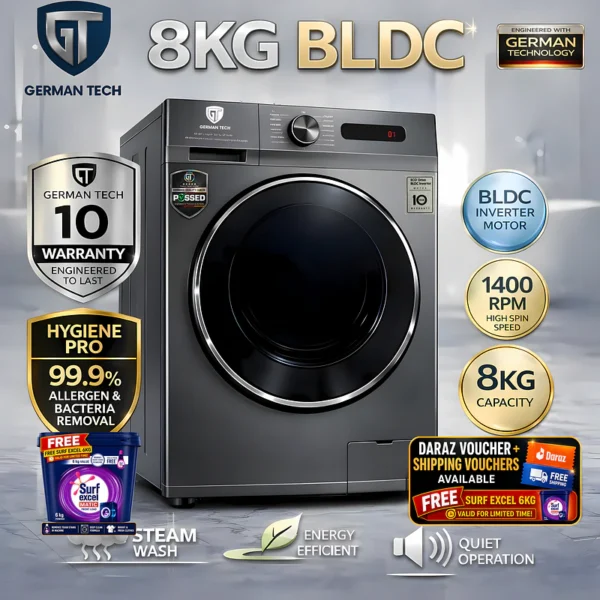
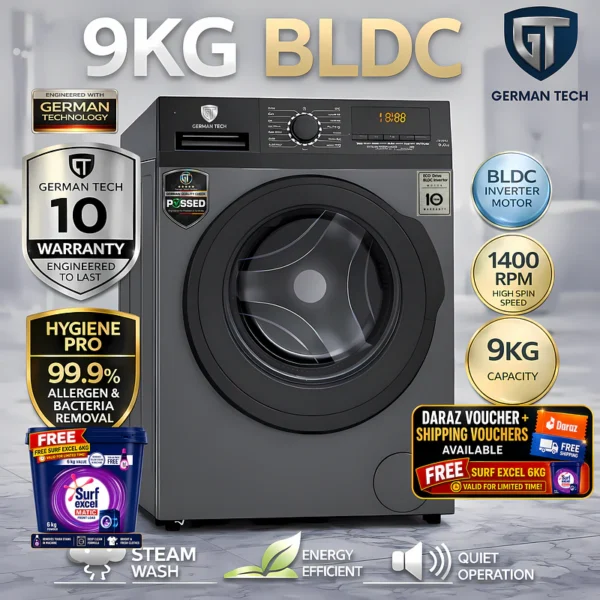
German Tech 8 KG Fully Automatic BLDC
Best for:
- Families of 3-4 members
- Daily or regular laundry
- Buyers looking for lower electricity consumption
- Homes that prefer quiet operation
Why Choose It?
The 8 KG BLDC model offers an ideal combination of capacity, efficiency, and convenience. This is a great option for most Nepalese households and can easily manage clothes, bed sheets, and even light blankets.
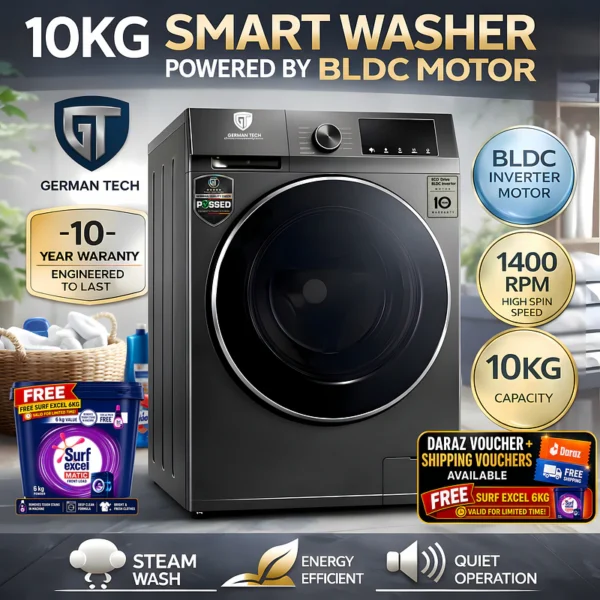
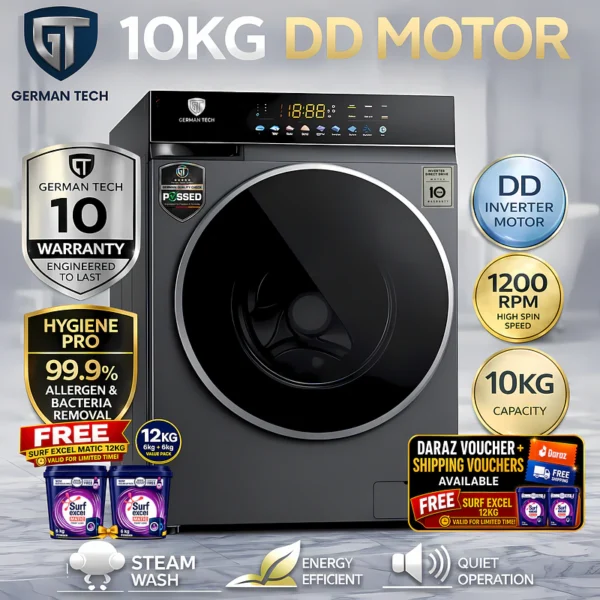
German Tech 10 KG Fully Automatic BLDC
Best for:
- Large families of 5 or more members
- Washing blankets, quilts, and heavy winter clothes
- Homes with frequent laundry loads
- Buyers looking for long-term energy savings
Why Choose It?
The larger drum and BLDC inverter motor of the washing machine make it ideal for families who need to wash a lot of clothes in fewer washes while remaining highly energy-efficient.
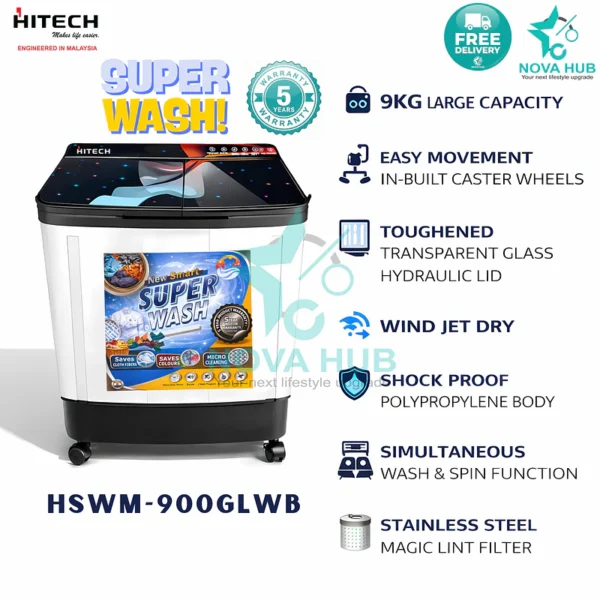
Hitech Malaysia 9 KG Semi-Automatic
Best for:
- Buyers In budget
- Homes facing occasional water problems
- People who like manual operations
- First-time buyers of washing machines
Why Choose It?
It is a semi-automatic washing machine that is both economical and efficient to use on a daily basis and is easy to operate, requires minimal maintenance, and works effectively.
Nova Hub also offers a wide range of washing machine models, so if you’d like to compare all available capacities, features, and prices, browse the complete collection to find the right fit.
Conclusion
Choosing the best washing machine is more than just the price. There are different factors, such as capacity, motor type, energy efficiency, warranty, and after-sales support, all of which play an important role in finding a machine that suits your household and delivers long-term value.
After getting an idea about the various kinds of washing machines, their features, preventing common mistakes, and learning about proper care, you will definitely be able to make a smart and sound decision that will suit your family’s requirements in the years to come.
Frequently Asked Questions
1. Which washing machine is best in Nepal?
The best washing machine depends on your household size, budget, and laundry needs. For most families, a fully automatic top-load washing machine with a BLDC inverter motor offers the best balance of energy efficiency, convenience, and long-term value. Choose the capacity based on the number of people in your home.
2. How much does a washing machine cost in Nepal?
The price of a washing machine in Nepal varies depending on its capacity, motor type, and features. Semi-automatic models are generally the most affordable, while fully automatic BLDC inverter and Direct Drive models cost more but offer better performance, energy efficiency, and durability.
3. Which capacity washing machine is right for my family?
For 1–2 people, a 7–7.5 KG washing machine is usually sufficient. Families of 3–4 members should consider an 8 KG model, while larger families may benefit from 9–12 KG capacities depending on their weekly laundry load.
4. Is a BLDC inverter washing machine worth buying?
Yes. BLDC inverter washing machines consume less electricity, operate more quietly, produce less vibration, and generally last longer than conventional motor models. They are an excellent choice for households looking for better long-term value.
5. How long does a washing machine usually last?
A quality washing machine can last 10–15 years or more with proper maintenance. Regularly cleaning the drum and lint filter, using the correct detergent, and avoiding overloading can help extend its lifespan.