

Induction in Nepal: Price, Best Models & Buying Guide 2026

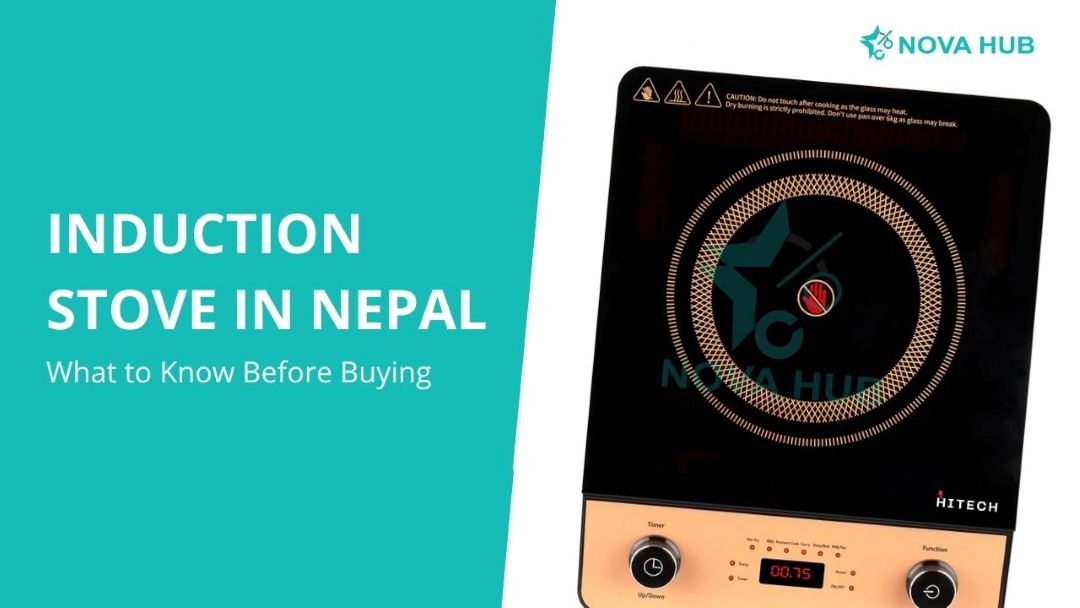
If you’re looking to buy an induction in Nepal, especially when cooking gas is difficult to find or LPG supplies are disrupted, choosing the right model can make a big difference. With more households considering electric cooking as an alternative to gas, induction cookers have become a practical option for everyday cooking.
However, choosing an induction cooker is not simply about buying the highest-wattage or most expensive model. Different models offer different power levels, cooking controls, safety features, cookware compatibility, and other functions. Your household size, cooking habits, and electrical setup also matter.
In this guide, we’ll explain how induction cookers work, what to check before buying one, which wattage is suitable for your needs, what cookware works with induction, and how induction compares with gas and infrared cooking. We’ll also cover the key factors to consider when choosing an induction in Nepal so you can make a practical decision based on your cooking needs.
Quick Answer
If you want to buy an induction in Nepal, choose a 1800–2000W model with adjustable power/temperature settings, essential safety features, compatible cookware support, and a reliable warranty. For most households, this offers a good balance of cooking performance, convenience, and everyday usability.
What Is an Induction Stove?
An induction stove is an electric cooking appliance that uses electromagnetic energy to heat compatible cookware directly instead of producing a flame. It offers fast and controlled cooking, making it a useful alternative to traditional gas stoves, particularly when LPG availability is limited.
Unlike regular electric hot plates, induction cookers require compatible cookware, such as pots and pans with a magnetic base.
How to Choose the Best Induction in Nepal
Choosing the best induction in Nepal depends on how you cook, how often you use it, and your household’s needs. Instead of focusing on one specification, consider these factors before buying:
Check the Wattage
Wattage affects how quickly an induction cooker can heat your cookware. For regular household cooking, an 1800W to 2000W induction is generally a practical range. Lower-wattage models may work for basic cooking, while higher-wattage models can provide faster heating but may require more power.
Look for Adjustable Power and Temperature Controls
Choose an induction with multiple power or temperature levels. This gives you better control when doing different types of cooking, from boiling and frying to simmering and reheating.
Check the Safety Features
Safety features are especially important for everyday use. Look for functions such as overheating protection, automatic shut-off, child lock, and pan detection. These features can make the cooker safer and easier to use.
Make Sure Your Cookware Is Compatible
Induction cookers only work with cookware that has a magnetic base. Cast iron and many stainless-steel cookware pieces are compatible, while aluminium, copper, glass, and ceramic cookware may not work unless they have an induction-compatible base.
Consider Your Electricity Setup
Before buying, consider your home’s electrical capacity and how you normally use other appliances. A higher-wattage induction can draw significant power, so your electrical setup should be suitable for the model you choose.
Check Warranty and After-Sales Support
A good warranty and accessible after-sales support can be important if the induction develops a problem. Check the warranty period, service availability, and whether replacement parts are available before making your purchase.
How Much Does an Induction Cost in Nepal?
The price of an induction cooker in Nepal generally starts at around NPR 4000 and can go beyond NPR 10,000, depending on the brand, wattage, features, and number of burners. Basic models are suitable for simple everyday cooking, while higher-priced models may offer better controls, safety features, build quality, and warranty support.
Instead of choosing an induction based only on price, compare the wattage, features, warranty, and suitability for your cooking needs. You can also explore Nova Hub’s available induction cookers in Nepal to compare models and find one that fits your requirements.
Why Switching From LPG to Induction Makes Sense in Nepal
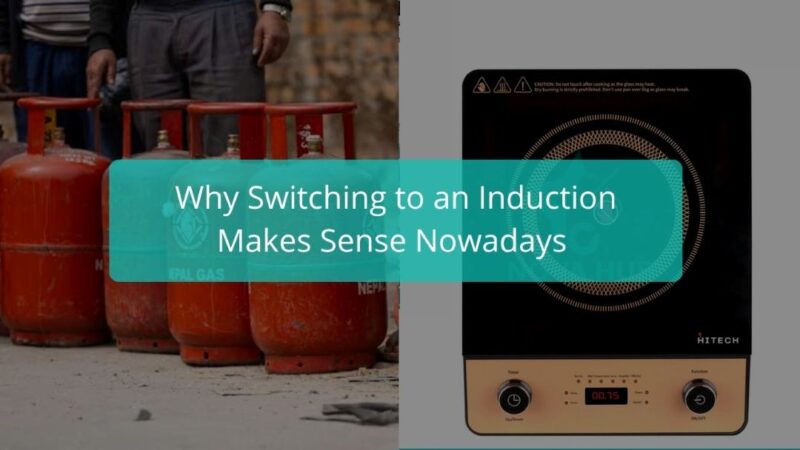
With LPG shortages and supply problems making gas harder to depend on at times, many households in Nepal are looking for another way to cook their everyday meals. An induction stove can be a convenient alternative, especially for people who have a reliable electricity supply.
But LPG shortages are not the only reason to consider switching to induction. An induction stove can make everyday cooking easier in several ways:
- Faster cooking: Induction stoves can heat compatible cookware quickly, helping you spend less time waiting for food to cook.
- Easy heat control: You can adjust the heat level depending on what you are cooking, from boiling water to simmering food.
- No open flame: Unlike a gas stove, an induction stove does not use an open flame.
- Easy to clean: The smooth cooking surface is easier to wipe down after cooking.
- Takes up less space: Many countertop induction stoves are compact, making them useful for smaller kitchens or as an additional cooking option.
- Useful as a backup: You can use induction for everyday cooking while keeping your LPG stove available when electricity is unavailable.
So, switching to induction does not necessarily mean giving up your gas stove completely. For many households, using induction alongside LPG can be a practical way to have another cooking option when gas is difficult to get or when you simply want a more convenient way to prepare certain meals.
Is Induction Better Than Gas?
Induction can be a strong choice if you have reliable electricity and compatible cookware, and you want convenient, flame-free cooking. Gas can remain useful as a backup because it does not depend on electricity. For households dealing with unreliable electricity, keeping an LPG stove as a backup can be sensible.
For households with reliable electricity that want to reduce dependence on LPG for suitable cooking tasks, induction can be a practical option.
Is an Induction Stove Safe to Use and How Does It Work?
Yes, induction stoves are generally considered safe for everyday cooking when used correctly. Unlike gas stoves, they do not have an open flame, which can reduce the risk of accidental fire.
An induction stove uses electricity to heat compatible pots and pans directly. When you place suitable cookware on the cooking surface, the stove creates heat in the cookware, which then cooks your food. The cooking surface itself does not work like a traditional gas flame or electric coil.
Many induction stoves also come with useful safety features such as automatic shut-off, overheat protection, child lock, pan detection, and timers. However, the features available depend on the model, so always check the product specifications before buying.
One thing you should remember is that induction stoves only work with compatible cookware. Cast iron and some stainless-steel cookware can work, while some aluminium, copper, glass, and other non-magnetic cookware may not.
Tip: If you are unsure whether your pot or pan will work, place a magnet against its bottom. If the magnet sticks firmly, the cookware is generally suitable for induction cooking.
Induction Stove vs Gas Stove vs Infrared Cooktop: Know the Difference
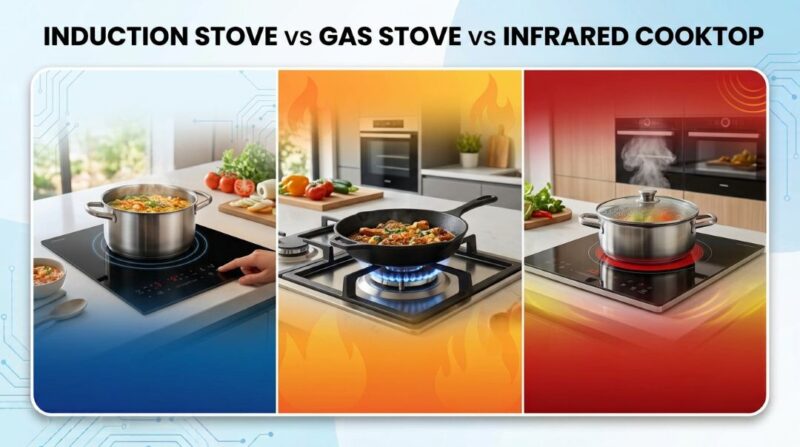
Before buying an induction stove, it is worth understanding how it compares with other cooking methods.
| Feature | Induction Stove | Gas Stove | Infrared Cooktop |
| Heat source | Electromagnetic induction | Gas flame | Electric heating element |
| Open flame | No | Yes | No |
| Cookware requirement | Magnetic-compatible cookware | Most cookware | Most flat-bottom cookware |
| Heating response | Fast | Fast | Moderate to fast |
| Electricity required | Yes | No | Yes |
| Gas required | No | Yes | No |
| Surface heating | Lower around the cooking area | Surrounding area gets hot | Cooking surface becomes hot |
| Power outage use | No | Yes | No |
| Cleaning | Generally easy | More parts to clean | Generally easy |
Induction vs Infrared: Which Is Better to Buy in Nepal?
Induction and infrared stoves both use electricity, but they operate differently and require different cookware.
Induction stoves heat compatible pots and pans directly. Because of this, you need cookware with a magnetic base. Whereas Infrared cooktops use a heating element under the cooking surface. They can work with a wider range of cookware, including many aluminium and other non-magnetic pots and pans.
So, which one should you choose?
- Choose induction if you want fast cooking, easy heat control, and already have induction-compatible cookware.
- Choose infrared if you want to use a wider range of your existing cookware.
- If you mainly use aluminium pots, check their compatibility with induction stoves before choosing one.
In simple terms, induction is a good choice when you have compatible cookware and want fast, controlled cooking, while infrared may be more convenient if cookware compatibility is your main concern.
How Much Electricity Does an Induction Stove Use?
One of the biggest questions when switching from gas to induction is “Will my electricity bill become expensive?”
The answer depends on how long you use the stove and the power level you choose. For example, a 1800W induction stove can use up to 1.8 units of electricity if it runs continuously for one hour at full power. In real cooking, the actual use can be lower because the stove is not always running at full power.
For a simple example, if you use an induction stove for 30 minutes, it could use around 0.9 units at full 1800W power. Your actual consumption will depend on the cooking time and power setting.
So, instead of thinking only about the wattage written on the stove, think about how long you actually use it every day. Shorter cooking times and lower power settings generally mean less electricity use.
What Wattage Induction Should You Choose?
You don’t need to understand watts in detail to choose an induction stove.
- 1200W–1500W: Suitable for light cooking and smaller meals.
- 1600W–1800W: A good choice for regular family cooking.
- 2000W or more: Better suited for larger meals and faster heating.
For most households, 1600W–1800W is a practical range for everyday cooking.
Simple tip: Don’t automatically choose the highest-wattage model. Choose one that matches the amount of food you normally cook and the electrical supply in your home.
Ready to Buy an Induction Stove?
Find the right induction stove in Nepal for your kitchen at Nova Hub. Explore our range and choose a model that fits your cooking needs.
-
-26%₨4,999Saved ₨ 1,801
-
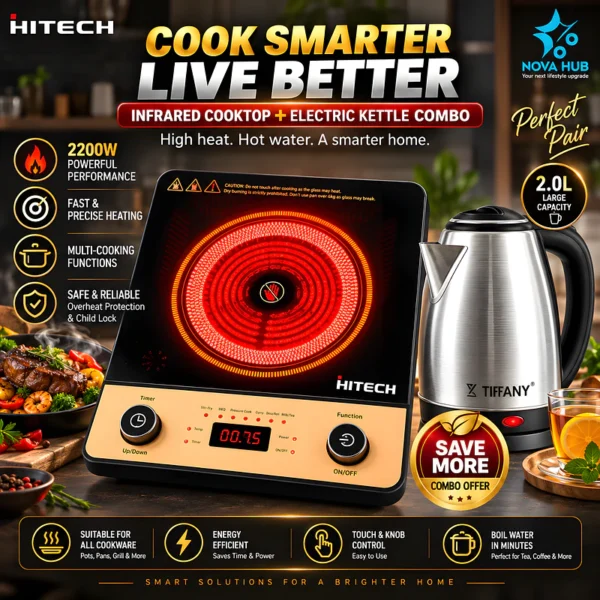 Price range: ₨7,471 through ₨8,600
 -
-33%₨4,199Saved ₨ 2,068
-
-29%₨3,999Saved ₨ 1,672
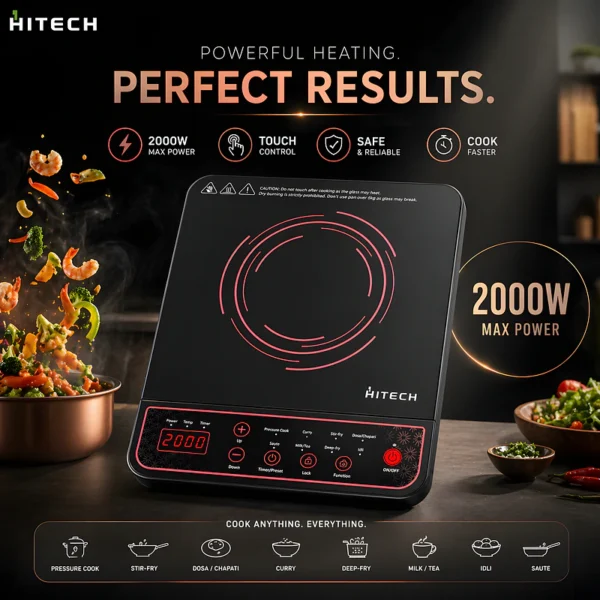
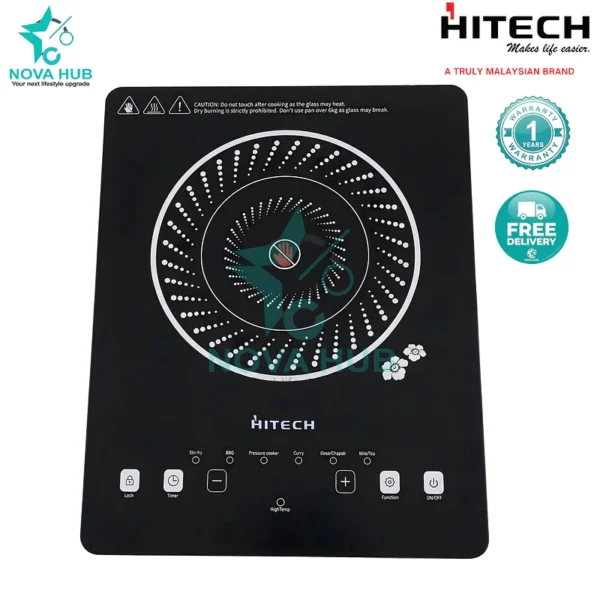
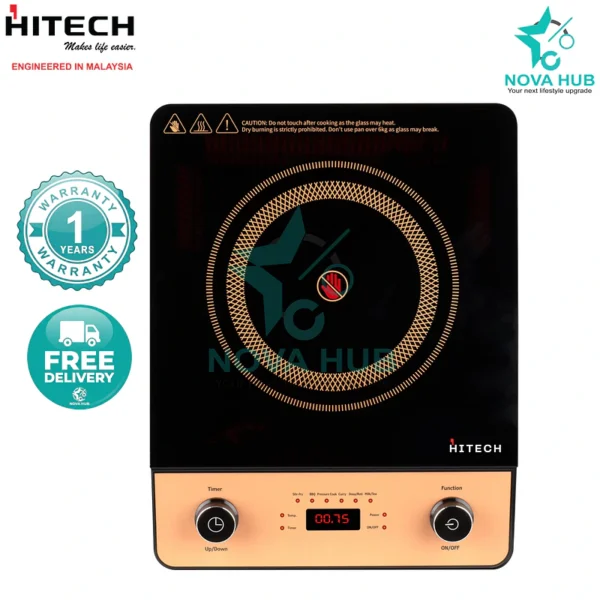
Which Cookware Works on an Induction Stove?
Cookware compatibility is one of the most important things to check before buying an induction cooker. Induction stoves generally require cookware with a magnetic base. Suitable cookware can include:
- Magnetic stainless steel
- Cast iron
- Iron cookware
- Induction-compatible pressure cookers
- Cookware specifically labelled as induction compatible
Traditional aluminium cookware generally does not work unless it has a suitable magnetic induction base.
What Features Should You Look For Before You Buy Induction In Nepal?
Safety is another reason many households consider induction cooking. When choosing an induction stove, look for features such as:
Automatic Shut-Off: The stove can switch off automatically under certain conditions, depending on the model.
Overheat Protection: This helps protect the appliance when excessive temperature is detected.
Pan Detection: Many induction cookers detect whether suitable cookware is present on the cooking zone.
Child Lock: A child-lock function can help prevent accidental changes to the controls.
Timer: A timer can be useful when cooking dishes that require a set cooking time.
Remember that safety features vary between models. Always check the manufacturer’s specifications rather than assuming every induction stove includes the same functions.
How to Maintain an Induction Stove
Taking care of your induction stove is simple, but regular cleaning and proper use can help keep it in good condition and working efficiently for longer.
Clean It After Cooking
Once the stove has cooled down, wipe the surface with a soft, damp cloth to remove food spills and grease. For tougher stains, use a cooktop cleaner recommended for glass surfaces.
Avoid Abrasive Cleaners
The glass surface can scratch easily. Avoid steel wool, rough scrubbers, or harsh cleaning products. A soft cloth or non-abrasive sponge is usually enough for everyday cleaning.
Lift Cookware Instead of Dragging It
Heavy pots and pans can leave scratches if you slide them across the cooktop. Try to lift and place your cookware gently instead.
Keep the Ventilation Area Clear
Most induction stoves have ventilation openings to help release heat. Keep these areas free from dust, food particles, and other obstructions so the stove can cool properly.
Keep the Control Panel Dry
Try not to let water or other liquids collect around the buttons or control panel. Wipe up spills quickly to prevent liquid from getting into the electrical components.
Follow the Manufacturer’s Instructions
Cleaning and maintenance requirements can vary between models. Always check the manufacturer’s instructions for specific recommendations, especially when using cleaning products or dealing with stains.
Common Induction Stove Problems and Solutions
| Problem | Possible Cause | What to Check |
| Stove does not turn on | Power supply issue | Check socket, plug and electricity supply |
| Stove does not heat | Incompatible cookware | Perform the magnet test |
| Stove stops during cooking | Overheating or protection feature | Allow the unit to cool and check ventilation |
| Error appears on display | Model-specific fault or cookware issue | Check the user manual |
| Cooking is slow | Low power setting or unsuitable cookware | Check power level and cookware base |
| Pan is not detected | Incorrect cookware | Use induction-compatible cookware |
| Surface becomes dirty | Food spills or residue | Clean with a suitable soft cloth |
If an appliance repeatedly displays an error, overheats, produces unusual sounds or fails to operate normally, stop using it and contact the manufacturer or an authorised service provider.
What Are the Common Mistakes to Avoid When Buying an Induction Stove?
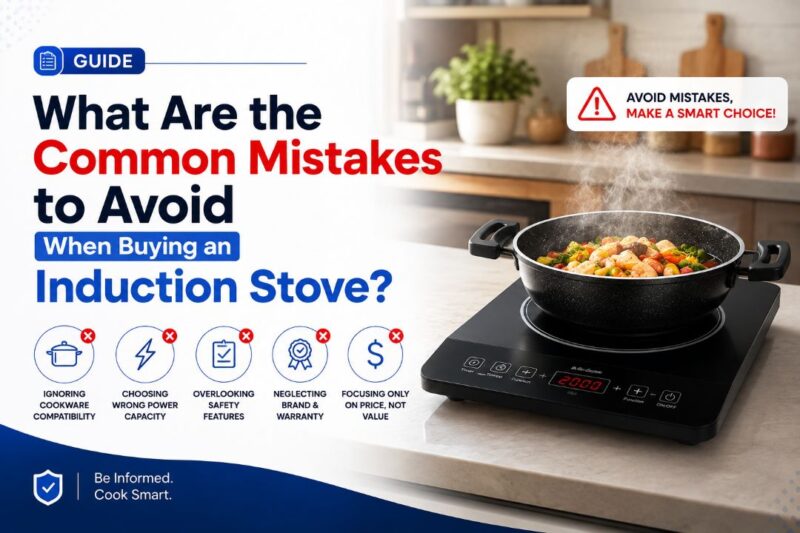
Buying an induction stove is not just about choosing the model with the highest wattage or the most features. Before making a decision, consider how you will actually use the stove and whether it suits your cookware, kitchen, and electrical setup.
Choosing Only by Wattage
A higher wattage does not always mean a better induction stove. While wattage affects heating power, you should also look at the controls, cooking modes, safety features, build quality, and warranty.
Forgetting About Cookware Compatibility
Not all cookware works with induction stoves. Before buying one, check whether your existing pots and pans have a magnetic base or are labelled as induction-compatible. This can save you from having to replace your cookware later.
Ignoring Your Home’s Electrical Setup
Induction stoves can use a significant amount of power, especially at higher settings. Consider what other high-power appliances you use at the same time and make sure your electrical connection can handle the load safely.
Buying Without Checking the Warranty
A good warranty can make a big difference if something goes wrong with your stove. Check the warranty period and find out who provides after-sales service and support before you buy.
Assuming Induction and Infrared Stoves Are the Same
Although both are electric cooktops, they use different heating technologies. Induction stoves use electromagnetic energy and require compatible cookware, while infrared stoves use a heating element and can work with a wider range of cookware.
How to Choose the Best Induction for your daily needs in Nepal
There is no single induction stove that is perfect for every household. Instead, match the appliance to your requirements.
- For light or occasional cooking: Consider a lower-wattage model with simple controls.
- For regular family cooking: Look for a model with suitable wattage, multiple power levels and essential safety features.
- For heavy daily cooking: Consider higher wattage, durable construction, suitable cookware compatibility and reliable after-sales support.
- For households concerned about electricity: Look at the appliance’s power rating, your cooking duration and how you actually use the different power settings.
- For households with aluminium cookware: Check compatibility before buying. You may need induction-compatible cookware or may prefer an infrared cooking option.
- For households with unstable electricity: Consider keeping LPG or another suitable cooking method as a backup.
Choosing the Right Induction Stove for Homes Across Nepal
For households looking for an alternative or additional cooking method, an induction in Nepal can be a practical option. But buying the right model requires more than choosing the highest wattage or the most features.
Consider your cooking habits, electricity supply, cookware, household size, safety requirements and after-sales support before making a decision.
If you are comparing induction cookers for your home, start by identifying the wattage you actually need and checking your existing cookware with the simple magnet test. From there, compare the features and specifications of suitable models.
Looking for an induction stove for your home? Explore the latest induction cooking options at Nova Hub and choose a model that best suits your cooking needs.
-
-26%₨4,999Saved ₨ 1,801
-
Price range: ₨7,471 through ₨8,600
-
-33%₨4,199Saved ₨ 2,068
-
-29%₨3,999Saved ₨ 1,672
Frequently Asked Questions About Induction Stoves in Nepal
Is an induction stove good for a Nepali kitchen?
Yes, an induction stove can be suitable for many Nepali households, particularly those with reliable electricity and compatible cookware. It can handle everyday cooking such as boiling, frying, simmering and pressure cooking, depending on the cookware and appliance.
Does induction cooking use a lot of electricity?
An induction stove uses electricity according to its power rating and operating time. For example, an 1800W appliance operating continuously at full power for one hour would consume approximately 1.8kWh. Actual consumption depends on the power setting and cooking duration.
Can I use aluminium cookware on an induction stove?
Traditional aluminium cookware generally does not work directly on a standard induction stove because aluminium is not magnetic. Some cookware has a magnetic induction-compatible base, so check the manufacturer’s instructions or perform a magnet test.
How can I check whether my cookware is induction compatible?
Place a magnet against the bottom of the cookware. If it sticks firmly, the cookware is generally compatible with induction. You should also check that the cookware has a suitable flat base.
Is induction safer than a gas stove?
Induction cooking eliminates the open flame associated with gas cooking and can include features such as automatic shut-off, pan detection and overheat protection. However, users should still follow electrical and appliance safety instructions.
Is induction better than infrared?
It depends on your needs. Induction can offer fast direct heating but requires compatible magnetic cookware. Infrared cooktops generally work with a wider range of cookware. Choose based on your cookware, cooking habits and electricity requirements.
How do I clean an induction stove?
After the cooking surface has cooled appropriately, clean it with a soft cloth and a suitable cooktop cleaner. Avoid abrasive materials and do not drag heavy cookware across the glass surface.


