11.11 Campaign Crazy offers on all products upto 33%, Limited Time Offer t&c Apply


Best Room Heater In Nepal: Types & Buying Guide


Last updated:
Choosing the right room heater becomes important when winter temperatures start dropping across Nepal. Whether you live in Kathmandu, Pokhara, the Terai region, or the colder hill areas, a suitable room heater can make your bedroom, living room, or workspace more comfortable in winter.
But which room heater is best for your home? Should you choose a fan heater for quick warmth, a halogen heater for personal heating or an oil-filled radiator for consistent room heating?
The answer depends on your room size, heating requirements, electricity consumption and budget. For quick heating in smaller spaces, fan and halogen heaters are practical options. For longer heating periods, oil-filled heaters may provide more consistent warmth. Each type has different advantages, limitations and operating requirements.
Which Room Heater Is Best for Your Home in Nepal?
The best room heater depends on how you intend to use it. Different heating technologies suit different room sizes and heating needs. Here is a quick comparison to help you understand the available options.
| Room heater type | Best suited for | Main advantage | Important consideration |
| Fan heater | Small bedrooms and offices | Quick warm air circulation | Fan noise and airflow |
| Halogen heater | Personal heating and small spaces | Direct radiant heat | Limited heating coverage |
| Quartz heater | Personal heating | Fast radiant warmth | Direct heating rather than whole-room heating |
| Ceramic heater | Bedrooms and workspaces | Adjustable heating options | Check wattage and room coverage |
| Oil-filled radiator | Extended indoor heating | Gradual and consistent warmth | Takes longer to heat up |
| Convector heater | Enclosed indoor spaces | Natural warm air circulation | Heating response varies by model |
| Gas room heater | Best for ventilated spaces | Fuel-powered heating | Requires strict ventilation and safety precautions |
Before choosing a heater, consider the room size, how often will you use it, and whether you need immediate warmth or consistent heating throughout the day.
What Are the Different Types of Heaters Available in Nepal?

There are different types of room heater available in nepal, including halogen, fan, quartz, ceramic, oil-filled, convector, and gas heaters. Each offers a different heating method, so the right choice depends on your room size, heating needs, electricity availability, and safety requirements.
1. Halogen Heater
A halogen heater uses heating tubes to produce direct radiant heat. It provides warmth quickly without using a fan to circulate hot air.
Key features:
- Provides instant, direct warmth.
- Lightweight and easy to move.
- Usually offers multiple heat settings.
- Best for personal heating and smaller spaces.
Best for: People who need quick warmth while sitting or working in a specific area.
2. Fan Heater
A fan heater uses an electrical heating element and a fan to distribute warm air. It heats nearby spaces quickly and is commonly used in bedrooms and small offices.
Key features:
- Circulates warm air quickly.
- Compact and portable.
- Often includes adjustable heat settings.
- Some models have thermostat controls.
Best for: Small bedrooms, offices, and spaces that need quick heating.
3. Quartz Heater
A quartz heater uses electrically heated quartz tubes to produce radiant heat. It warms nearby people and objects directly rather than circulating hot air.
Key features:
- Produces direct radiant warmth.
- Heats up quickly.
- Usually compact and portable.
- Does not require a fan.
Best for: Personal heating during cold mornings and evenings.
4. Ceramic Heater
A ceramic heater uses ceramic heating elements to generate warmth. Many models include a fan to distribute warm air and may offer adjustable temperature settings.
Key features:
- Uses ceramic heating technology.
- Often includes multiple heat settings.
- Some models offer oscillation and thermostat controls.
- Available in portable designs.
Best for: Bedrooms and home offices where adjustable heating is useful.
5. Oil-Filled Heater
An oil-filled heater uses electricity to heat oil sealed inside metal columns. The heated oil gradually transfers warmth to the surrounding space.
Key features:
- Provides steady, gradual heating.
- Retains warmth for some time after switching off.
- Operates quietly without a fan.
- Suitable for longer heating periods.
Best for: People who prefer consistent warmth in bedrooms and living spaces.
6. Convector Heater
A convector heater warms air through an electrical heating element. Warm air rises naturally while cooler air moves towards the heater, helping circulate heat.
Key features:
- Provides gradual heating.
- Available in portable and wall-mounted designs.
- Some models include adjustable thermostats.
- May operate without a fan.
Best for: Enclosed indoor spaces where you prefer gradual heating.
7. Gas Heater
A gas heater uses LPG or another specified fuel to generate heat. It can provide warmth without depending entirely on electricity.
Key features:
- Uses LPG or another compatible fuel.
- Available in different heating capacities.
- Requires proper ventilation.
- Needs appropriate safety controls.
Best for: Households that prefer fuel-powered heating and can meet the manufacturer’s safety requirements.
Safety note: Never use an outdoor gas heater indoors. Always follow ventilation instructions and use a carbon monoxide alarm when operating fuel-burning heaters.
Looking for a Heater in Nepal? Explore Nova Hub
If you’re looking for a heater to stay comfortable during the winter, explore the Hitech Malaysia Lava Deluxe Halogen Heater available at Nova Hub. Check its features and specifications to see whether it suits your heating needs. Visit Nova Hub to explore the product and place your order.
-

Hitech Malaysia Lava Deluxe Halogen Heater
-39%₨3,499Saved ₨ 2,277
Halogen vs Quartz vs Fan vs Oil-Filled Heater: Which Is Better?
The best heater depends on how quickly you need warmth, how much space you want to heat, and how long you plan to use it.
| Comparison | Halogen | Quartz | Fan | Oil-filled |
| Heating speed | Quick | Quick | Quick | Gradual |
| Heat distribution | Direct warmth | Direct warmth | Circulates warm air | Gradual, even warmth |
| Operating noise | Quiet | Quiet | Produces fan noise | Quiet |
| Best for | Personal heating | Small areas | Quick heating | Extended heating |
| Main limitation | Limited coverage | Limited coverage | Noise | Slow warm-up |
Which Heater Should You Choose?
- Halogen: For quick, direct warmth while sitting or working.
- Quartz: For personal heating in smaller spaces.
- Fan: For quickly circulating warm air in a small room.
- Oil-filled: For quieter, consistent warmth over longer periods.
Your heater’s electricity consumption mainly depends on its wattage and how many hours you use it. A higher-wattage heater generally consumes more electricity when operating at full power.
How to Choose the Best Room Heater for Your Room?
Choosing a room heater for your room size matters because heating capacity affects how well an appliance can maintain a comfortable temperature. A heater designed for a small bedroom may not provide sufficient warmth in a larger living room. Here are some practical considerations for different spaces.
Best Heater for a Small Bedroom
A fan, halogen or quartz heater can work well in a small bedroom. These heaters provide quick warmth without requiring a large appliance. Choose a model with adjustable heat settings and overheat protection. Tip-over protection is also useful, especially if you place the heater on the floor.
Best Heater for a Large Living Room
Heating a large living room requires more capacity than heating a small bedroom. Oil-filled, convector or ceramic heaters may be suitable, depending on their heating capacity and recommended room coverage. Room insulation, ceiling height and the number of windows can also affect how well a heater warms the space.
Best Heater for a Home Office
For a home office, a fan or ceramic heater can provide quick warmth while you work. If you prefer a quieter option, an oil-filled heater may be a better choice. Consider the noise level, adjustable temperature settings and portability before buying.
Best Heater for a Baby’s or Elderly Person’s Room
Safety matters most when choosing a heater for a room used by a baby or an elderly person. Look for a stable design, thermostat control and safety features such as overheat and tip-over protection. Keep the heater away from bedding, curtains and furniture. Never leave a portable heater running unattended.
How Much Does a Room Heater Cost in Nepal?

Room heater prices in Nepal vary by brand, heating technology, wattage, build quality, and additional features. For example, a basic fan or halogen heater generally costs less than an advanced ceramic heater or oil-filled radiator. When comparing room heater prices in Nepal, consider the following factors:
1. Heating technology: Different heating methods involve different designs, components and manufacturing costs.
2. Wattage: Higher heating output can affect the appliance’s overall cost and electricity consumption.
3. Brand and build quality: Manufacturing quality, materials, product reliability and brand reputation influence the price.
4. Safety features: Thermostat control, overheat protection, and tip-over switches can affect product specifications and cost.
5. Warranty and service: Warranty coverage and local after-sales support are also important when comparing products.
The most suitable choice is not necessarily the cheapest heater. Consider its heating capacity, safety, expected usage and long-term operating requirements.
What Should You Consider Before Buying a Room Heater in Nepal?
Before choosing an electric room heater, compare its specifications and suitability for your home. Here are the most important factors to consider.
1. Room Size and Heating Capacity
Before buying heater measuring the room where you plan to use the heater because A compact heater may suit a small bedroom, while a larger living room may need an appliance with greater heating capacity. Check the manufacturer’s recommended room coverage before purchasing.
2. Wattage and Electricity Consumption
Check the wattage of heater to understand how much electrical power it needs to operate. If you plan to run the heater for several hours each day, estimate monthly electricity consumption before deciding.
3. Thermostat and Temperature Control
A thermostat helps regulate room temperature by controlling the heater’s operation. This can improve comfort and prevent unnecessary continuous heating. Look for adjustable temperature settings that match your daily requirements.
4. Overheat Protection
Overheat protection automatically switches off a heater when its internal temperature becomes too high. This is an important safety feature to look for when comparing electric room heaters.
5. Tip-Over Protection
A tip-over switch helps automatically shut off certain portable heaters if they fall or become tilted beyond their designed operating position. This feature is particularly useful in households with children and pets, although it does not replace safe placement.
6. Voltage and Electrical Compatibility
Check the manufacturer’s voltage and electrical requirements before purchasing.Voltage fluctuations and power interruptions can affect electrical appliances. Make sure your household wiring, socket and circuit can safely handle the heater’s power requirements. Avoid using unsuitable extension boards or overloaded multi-plug adapters.
7. Warranty and After-Sales Support
Check the warranty period, service availability and availability of replacement parts. Buying from a retailer that provides clear product information and after-sales support can make it easier to resolve problems if your appliance develops a fault.
8. Portability and Storage
If you plan to move your heater between rooms, consider its weight, handle design and overall dimensions. A compact heater is generally easier to move and store after winter.
What Should You Know About Using Room Heaters in Nepal?
Buying the right heater is only one part of staying comfortable during winter. Your home environment and local electricity conditions also matter. Here are a few Nepal-specific considerations.
Electricity Supply and Voltage Fluctuations
The electric heater consumes a lot of power, particularly those with higher watts. You should ensure that the electric outlet and wiring of your house can supply to the wattage of the device. In case there are frequent changes in voltages, you should seek advice from an electrician or manufacturer of the heater. Not all stabilizers can be used with high-wattage heaters.
Power Interruptions
The electrical room heater will fail to offer any warmth when the supply of electricity is cut off. It will be wise for you to think about your heating needs when such power interruptions happen, and then determine if there is a need for a different heating system. High-watt heaters should never be used with inappropriate UPS or inverters.
LPG Availability and Gas Heater Safety
LPG heaters could be one of the options that some families may consider as an alternative to electric heating. However, consider gas availability, ventilation requirements, and safe fuel storage before choosing this option. Never operate an LPG heater in an enclosed room without the ventilation required by its manufacturer.
Is It Safe to Use a Room Heater While Sleeping?
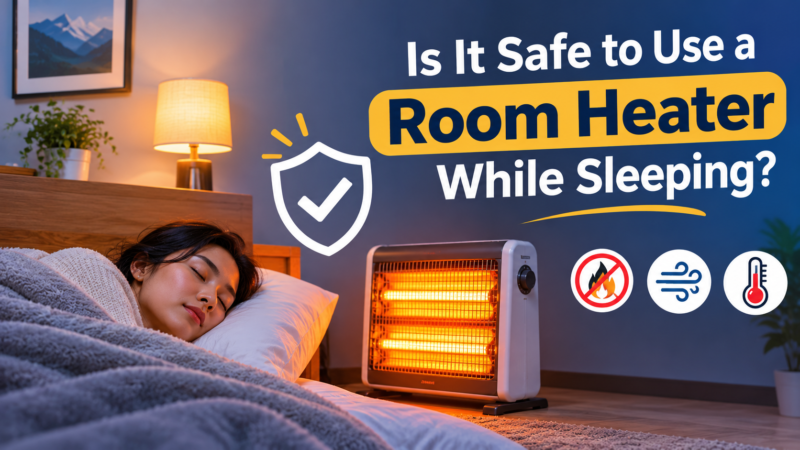
Using a room heater while sleeping requires extra care because Portable electric heaters should not be left operating unattended overnight unless the manufacturer explicitly permits the intended use and all required safety conditions are met. Consider these precautions:
- Keep the heater away from blankets, mattresses and curtains.
- Place it on a stable, flat surface.
- Never cover the heating outlet.
- Avoid using damaged electrical cables or plugs.
- Use a heater with appropriate safety protection.
- Switch it off before going to sleep when overnight operation is not specifically approved.
Electric room heaters do not consume oxygen through combustion, but they can make indoor air feel dry. Gas heaters are different because fuel combustion can produce carbon monoxide and requires appropriate ventilation.
How to Use a Room Heater Safely at Home
Following basic safety precautions can help to reduce the risk of accidents during winter.
- Keep the heater at a safe distance from curtains, furniture, bedding and other flammable materials. Follow the manufacturer’s clearance instructions.
- Place the appliance on a stable and heat-resistant surface.
- Never use a room heater to dry clothes or towels.
- Keep children and pets away from hot surfaces.
- Avoid overloading electrical sockets and extension boards.
- Do not leave a portable heater unattended.
- Switch off and unplug the heater when it is not in use.
- Clean and maintain the appliance according to the manufacturer’s instructions.
- For gas heaters, follow ventilation requirements and use a suitable carbon monoxide alarm.
Never use an outdoor fuel-burning heater inside a home. Proper ventilation and responsible operation are essential for safe indoor heating.
Where Can You Buy a Room Heater in Nepal?

If you plan to buy a room heater in Nepal, choose a retailer that offers genuine products, clear specifications, and reliable after-sales support. Before purchasing, compare the heater’s wattage, heating capacity, safety features, warranty and suitability for your room.
At Nova Hub, you can explore available heating appliances and compare their specifications to find a suitable option for your home.
Nova Hub currently lists the Hitech Malaysia Lava Deluxe Halogen Heater in its heater category. If you are considering a halogen heater for personal or smaller-space heating, check the product specifications and features before deciding.
-
Hitech Malaysia Lava Deluxe Halogen Heater
-39%₨3,499Saved ₨ 2,277
Frequently Asked Questions About Room Heaters in Nepal
1. Which is the best room heater in Nepal?
The best room heater depends on your room size, heating requirements and expected usage. Fan and halogen heaters work well for quick heating in smaller spaces, while oil-filled heaters suit gradual, consistent heating over longer periods.
2. What is the price of a room heater in Nepal?
Room heater prices in Nepal depend on the brand, heating technology, wattage, build quality and additional features. Basic fan and halogen heaters generally cost less than ceramic and oil-filled models. Compare specifications and warranty before purchasing.
3. Which room heater is best for a small bedroom?
A compact fan, halogen, or quartz heater may suit a small bedroom. Check the recommended room coverage, wattage, thermostat and safety features before choosing one.
4. Which is better: a halogen heater or an oil-filled heater?
Halogen heaters provide quick radiant warmth, making them suitable for personal heating. Oil-filled heaters take longer to warm up but provide gradual and consistent heat. Choose according to your room size and expected usage.
5. How much electricity does a 2,000W room heater consume?
A 2,000W heater consumes approximately two units of electricity per hour when operating continuously at full power. If used for five hours, it consumes approximately ten units.
6. Does a room heater increase electricity bills?
Yes. Electric room heaters can increase household electricity consumption, especially when operated for several hours daily. The additional cost depends on wattage, operating time and your applicable NEA electricity tariff.
7. Which room heater is suitable for longer use?
Oil-filled radiators are often suitable for extended heating because they provide gradual and consistent warmth. However, actual electricity consumption depends on the heater’s wattage, thermostat and operating conditions.