How to Choose a Geyser in Nepal: Complete Guide


Last updated:
Learn how to choose a geyser in Nepal with our expert guide that covers energy efficiency, capacity, and safety features for your home water heating needs.
If you are planning a bathroom renovation or simply tired of cold showers, knowing how to choose a geyser in Nepal is essential for year-round comfort. Our local climate and varying power infrastructure make selecting the right unit a practical investment rather than just a luxury. For many households, a reliable option like the Hitech Malaysia Aqua Series 10/15/25 Ltr Electric Water Heater, priced at NPR 11,990 offers a dependable starting point.
In this guide, we will explain what a geyser is and why it is a necessity for Nepali homes. We will compare electric versus gas models, help you match tank capacity to your family size, highlight key safety specifications, and show you how to estimate your monthly electricity costs.
What is a geyser and why do Nepali homes need one?
A geyser, or electric water heater, is a storage tank appliance designed to heat water using an internal heating element and keep it at a set temperature until you need it. In the context of a Nepali household, it acts as a reliable bridge between our cold tap water supply and the necessity for comfortable daily tasks like bathing and washing dishes.
The need for a geyser in Nepal is driven primarily by our geography and climate. During the winter months, especially in the hills and the Kathmandu Valley, tap water temperatures can drop significantly, making basic chores physically uncomfortable. Even during the monsoon or transition seasons, the water supply remains cold enough that a dedicated heating source is essential for maintaining hygiene and comfort.
Beyond just comfort, geysers are a practical utility for the modern home. By providing instant access to hot water, they eliminate the time-consuming and often dangerous process of heating water on a stove.
In Nepal, where water quality and electrical infrastructure can vary, a well-chosen geyser needs to be durable. You are looking for a system that balances:
- Reliability: The ability to withstand local water conditions and consistent daily use.
- Efficiency: Features like copper heating elements, such as those found in the Hitech Malaysia Aqua Series, which are designed to heat water quickly to manage electricity consumption.
- Safety: Modern units now include features like glass-lined tanks and digital temperature displays to prevent overheating.
Whether you live in a small apartment or a large family home, the right geyser turns a basic household utility into a consistent, reliable service that functions regardless of the season.
Electric vs. gas geysers – which is right for Nepal?
In Nepal, choosing between electric and gas geysers depends heavily on your household’s utility setup and safety priorities.
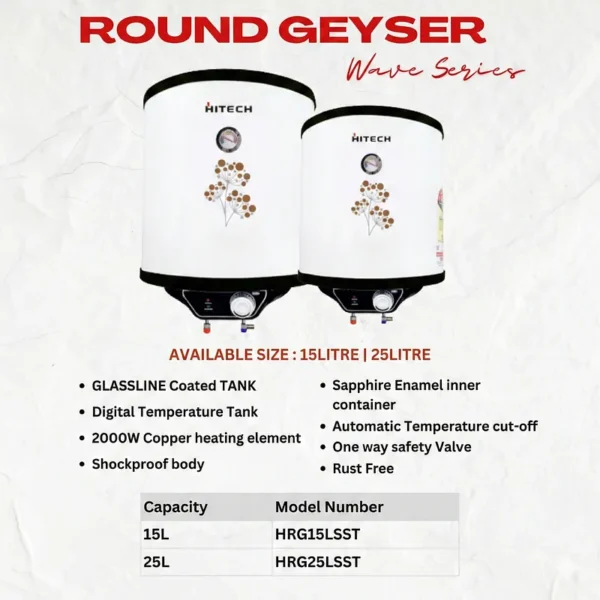
Electric geysers, like the Hitech Malaysia Aqua Series, are the most common choice for modern apartments and homes. They are safer because they do not require combustion, meaning there is no risk of gas leaks or carbon monoxide buildup. Since they rely on a heating element-often copper, which is efficient at heat transfer-they provide consistent, reliable performance. However, they do consume significant power. With a 2000W heating element, these units draw electricity at a rate that will impact your monthly NEA bill. Depending on your consumption slab, electricity costs typically range from NPR 3 to NPR 11 per unit, so it is wise to check your specific billing tier to manage running costs.
Gas geysers, conversely, are often preferred in areas with unreliable electricity or for households that want to avoid high power consumption. They provide near-instant hot water without putting a load on your electrical grid. The trade-off is the logistical requirement of managing LPG cylinders and ensuring proper ventilation. Because they burn fuel, you must install them in a well-ventilated space to prevent dangerous gas accumulation, which can be difficult in smaller, enclosed Nepali bathrooms.
To help you decide, consider these factors:
- Safety: Electric models are generally safer for indoor, enclosed spaces.
- Convenience: Electric units are "set and forget," while gas units require monitoring fuel levels.
- Reliability: Gas geysers function during power outages, whereas electric models require grid power to heat.
- Maintenance: Electric units require periodic tank cleaning, while gas units need regular checks on burners and gas lines.
Most urban households find electric geysers more practical due to safety and ease of use, provided you manage your electricity usage effectively.
How to match capacity with household size
Choosing the right tank capacity is the most important step to ensure you have enough hot water without wasting electricity. In Nepal, where electricity usage is a significant consideration, picking the correct size prevents the need to constantly reheat water or run out mid-shower.
For most households, the choice comes down to these three standard sizes:
- 10 Liters: This is best for single users or couples living in small apartments. It is efficient for quick showers or washing up in the kitchen. Because it holds less water, it heats up faster, which is helpful if you are in a rush during the morning.
- 15 Liters: This is the most common choice for a typical family of three. It provides enough volume for back-to-back showers without waiting for the tank to refill and reheat. It strikes a good balance between space-saving design and sufficient hot water capacity.
- 25 Liters: If you have a larger family of four or more, or if you prefer taking a bath rather than a shower, a 25-liter tank is necessary. It holds a larger reserve, ensuring that everyone in the house can use hot water without the supply running cold.
When deciding, think about your daily routine rather than just the number of people in your home. If your family members tend to shower one after another, you need a larger tank to maintain a steady flow. Conversely, if your usage is spread out throughout the day, a smaller unit like the 10-liter Hitech Malaysia Aqua Series can be more energy-efficient, as you are not keeping a large volume of water hot unnecessarily. Always consider the space available in your bathroom, as larger tanks require more wall support and physical room.
Key specifications to look for
When buying a geyser, the technical specifications dictate both your daily convenience and the appliance’s lifespan. Focus on these four areas to ensure you are getting a machine that can handle Nepal’s unique environment.
Wattage
Wattage determines how fast the water heats up. Most standard electric geysers, like the Hitech Malaysia Aqua Series, operate at 2000W. A higher wattage allows the heating element to reach your desired temperature more quickly. Because Nepal’s electricity rates vary based on your monthly consumption-ranging roughly from NPR 3 to NPR 11 per unit-faster heating reduces the time the unit stays active, which helps manage your electricity bill. Always check your specific electricity tariff on your NEA bill to understand your costs.
Heating Element Material
The heating element is the heart of the geyser. Copper is the industry standard because it is a highly efficient conductor of heat. Elements made from copper, such as those found in the Hitech Aqua series, provide reliable, fast performance. This is essential for morning rushes when you need warm water on demand.
Temperature Control
Modern geysers often include a digital temperature display. This feature is more than just an aesthetic upgrade; it provides real-time tracking, allowing you to monitor the water temperature accurately. This helps prevent overheating and ensures you are not wasting power by heating water higher than necessary.
Warranty and Build
Given the local water quality and power fluctuations, the warranty is your best indicator of build quality. Look for a comprehensive brand warranty. For instance, the Hitech Malaysia Aqua Series provides a tiered coverage plan:
- 3 years on the product
- 3 years on the heating element
- 5 years on the glass tank
Be aware that these warranties typically exclude damage caused by voltage fluctuations, water damage, or unauthorized service. Proper installation is critical to keeping this coverage valid.
Estimating running cost and electricity consumption
To understand the running cost of your geyser, you must first calculate how much electricity it consumes. The Hitech Malaysia Aqua Series, for example, uses a 2000W (2kW) heating element. Since 1 kWh (kilowatt-hour) equals 1000 watts used for one hour, this unit consumes 2 units of electricity for every hour it is actively heating.
Your actual consumption depends on your daily habits. If you switch the heater on for 30 minutes each morning, you are using 1 kWh per day. Over a 30-day month, that totals 30 units of electricity.
To estimate your monthly bill, apply this usage to the Nepal Electricity Authority (NEA) tariff slabs:
- Determine your total monthly usage: Add your geyser’s estimated monthly consumption to your other household appliance usage.
- Check the NEA slab: NEA electricity rates currently range from roughly NPR 3 to NPR 11 per unit, depending on your total consumption bracket.
- Calculate: Multiply your total units by the rate applicable to your specific slab.
Because electricity rates increase as your consumption moves into higher brackets, a high-capacity geyser used frequently will push you into more expensive tiers faster. Always keep an eye on your actual monthly electricity bill to see which slab your household typically falls into.
Remember that these are estimates. Factors like the initial temperature of the incoming water, the insulation quality of your geyser tank, and the set temperature on the digital display will all affect how long the heating element stays on. If your area experiences frequent power fluctuations, ensure you have a stabilizer installed, as voltage issues can impact both the performance of the heating element and your overall energy efficiency.
Featured Product

Hitech Malaysia Aqua Series 10/15/25 Ltr Electric Water Heater Geyser – Aqua Series 10 Ltr Electric Water Heater Geyser
Installation basics and safety checks
Proper installation is the most critical step in ensuring your geyser operates safely and efficiently. Because these appliances handle high-voltage electricity and pressurized water, you should always hire a qualified professional plumber and electrician. Improper installation often voids the manufacturer’s warranty, including the coverage provided for units like the Hitech Malaysia Aqua Series.
Start by selecting a location that is close to your bathroom or kitchen to minimize heat loss through pipes. The wall must be strong enough to support the weight of the geyser when it is completely full of water. Ensure the area is accessible for future maintenance, such as checking the pressure release valve or cleaning the heating element.
Regarding electrical requirements, a 2000W heater like the Hitech Aqua Series draws significant power. You must use a dedicated circuit with wiring thick enough to handle the load; using standard light-duty wiring can lead to overheating and fire hazards. Always install an ELCB (Earth Leakage Circuit Breaker) or a high-quality MCB to protect against short circuits.
Follow these essential safety checks:
- Grounding: Ensure the unit is properly earthed to prevent electric shocks, especially in damp bathroom environments.
- Pressure Valve: Never block the pressure release valve. It is a vital safety mechanism that prevents the tank from bursting if the internal pressure becomes too high.
- Pipe Connections: Use high-quality, heat-resistant piping. Ensure all joints are sealed correctly with Teflon tape to prevent leaks that could damage the unit or your wall.
- Voltage Stability: Since Nepal’s power supply can fluctuate, installing a stabilizer is recommended to protect the unit’s internal components. Remember that damages caused by voltage fluctuations are typically excluded from brand warranties.
Before switching the unit on for the first time, ensure the tank is completely full of water to avoid burning out the heating element.
Maintenance tips to extend the life of your geyser
In many parts of Nepal, hard water and high mineral content are common. Over time, these minerals build up as limescale inside the tank and on the heating element. This layer of scale acts as an insulator, forcing your geyser to consume more electricity to reach the same temperature.
To keep your unit running efficiently, consider these maintenance steps:
- Annual Descaling: Have a professional clean the tank and the heating element at least once a year. This removes the mineral deposits that accumulate due to local water conditions.
- Check the Magnesium Anode: Most modern electric heaters include a sacrificial anode rod to prevent tank corrosion. If you notice the water turning rusty or metallic, have a technician inspect this rod, as it may need replacement to protect the inner lining.
- Flush the Tank: If your geyser has been sitting unused for a long time, drain a few liters of water through the drain valve to clear out any sediment that settled at the bottom.
- Monitor Electrical Connections: Ensure the wiring and plug points are free from moisture. Given Nepal’s frequent power fluctuations, check that your stabilizer or MCB is functioning correctly to avoid damage not covered under standard warranties.
For models like the Hitech Malaysia Aqua Series, keeping the unit clean is essential to maintaining the performance of the copper heating element. Remember that the warranty-which covers the glass tank, the element, and the product itself-is voided by issues like voltage fluctuations or unauthorized service. Always use a qualified technician for repairs to ensure you remain eligible for brand support. If you notice the digital temperature display acting erratically or the water taking significantly longer to heat, these are early signs that your unit needs professional servicing before a total failure occurs.
Common mistakes Nepalese buyers make
Many buyers treat a geyser as a "set it and forget it" appliance, but a few common mistakes often lead to unnecessary repair costs or a voided warranty. Avoiding these pitfalls will save you money and keep your water heater running for years.
The most frequent error is oversizing. Buying a 25-liter tank when a 10-liter unit like the Hitech Malaysia Aqua Series would suffice for your household leads to higher electricity bills. You end up heating water you do not use, which is a waste of energy given the variable NEA tariff rates. Always choose a capacity that matches your actual daily needs.
Another major oversight is ignoring the specific terms of the warranty. For example, the Hitech Aqua Series offers a 5-year warranty, but it is split into 3 years on the product, 3 years on the element, and 5 years on the glass tank. Crucially, the warranty is void if there is physical damage, water damage, or issues caused by voltage fluctuations. In Nepal, where voltage spikes are common, using a stabilizer is often a smart move to protect your investment.
Finally, never attempt DIY repairs or use unauthorized service technicians. Tampering with the internal components or trying to fix a leak yourself will immediately cancel your brand warranty. If your geyser stops heating or shows an error, contact an authorized service center.
Keep these points in mind:
- Check the exclusions: Voltage fluctuations and unauthorized service are the fastest ways to lose your warranty coverage.
- Avoid DIY: Electrical appliances require professional handling for safety and to maintain your manufacturer protection.
- Right-size your unit: Only heat the water you actually need to keep your monthly electricity bill manageable.
How to decide – a quick checklist
To decide on the right geyser, follow this logical progression to ensure you match the appliance to your specific household needs.
First, determine your capacity requirements. A 10-liter unit, such as the Hitech Malaysia Aqua Series, is generally sufficient for a single person or a small household. If you have a larger family or require simultaneous use in different bathrooms, you should look toward 15-liter or 25-liter models.
Second, consider your power infrastructure. Most reliable electric units, including the Hitech Aqua Series, operate at 2000W. Since electricity in Nepal is billed based on consumption slabs-ranging roughly from NPR 3 to NPR 11 per unit-check your latest NEA electricity bill to understand your current usage tier. Because 1 kWh equals 1000 watts used for one hour, a 2000W geyser uses 2 units of electricity per hour of continuous heating.
Third, verify your installation space and water quality. Ensure your bathroom wall can support the weight of a full water tank. Since local water conditions can impact longevity, prioritize models that offer clear warranty terms on the tank and heating element. For instance, the Hitech Aqua Series provides a 5-year warranty on the glass tank and 3 years on the heating element, provided there is no damage from voltage fluctuations or improper installation.
Finally, set your budget. At Nova Hub, the current range for available models sits at Rs. 8,247 – Rs. 16,000. When comparing prices, ensure the total cost includes delivery to your specific location in Nepal and consider the long-term value of the warranty coverage. Remember that physical damage, water damage, or unauthorized service will void most manufacturer warranties, so professional installation is highly recommended.
Where the Hitech Malaysia Aqua Series fits in
The Hitech Malaysia Aqua Series is a middle-ground option in our current range, priced at NPR 11,990. It is a solid choice if you want a balance between modern features and long-term durability without paying a premium price.
The standout feature here is the 2000W copper heating element. Copper is an efficient conductor, which helps the unit heat water relatively quickly. This is particularly useful during cold Nepali winters when incoming tap water is near freezing. The inclusion of a digital temperature display is a practical addition, as it lets you monitor the water heat level in real-time rather than guessing.
This series is available in 10L, 15L, and 25L capacities, making it versatile enough for different household setups. Whether you need a smaller unit for a quick morning shower in a city apartment or a larger tank for a family home, the performance remains consistent across the range.
The warranty terms are structured to provide specific protection for the most critical parts:
- 3 years on the product itself.
- 3 years on the heating element.
- 5 years on the glass tank.
This model is best suited for households looking for a reliable, mid-range appliance that prioritizes core performance. Because it uses 2000W of power, ensure your bathroom wiring is capable of handling this load. Please note that the warranty does not cover issues caused by voltage fluctuations or improper water conditions, so if your area suffers from unstable power, a stabilizer is a sensible investment. Given that Nepal’s electricity rates vary based on your monthly consumption slab, keep in mind that the 2000W element will draw exactly 2 units of electricity for every hour of continuous heating. Always check your NEA bill to understand your specific unit rate.
Frequently Asked Questions
Do you deliver all over Nepal?
Yes, Nova Hub delivers all over Nepal, with free delivery on this product.
Is Cash on Delivery available?
Yes, Cash on Delivery options are available. All payments made are 100% secure.
Is there a warranty on the Hitech Malaysia Aqua Series 10/15/25 Ltr Electric Water Heater?
Yes. The Hitech Malaysia Aqua Series 10/15/25 Ltr Electric Water Heater comes with a brand warranty listed as 5 years: 3 YEARS ON PRODUCT / 3 YEARS ON ELEMENT / 5 YEARS ON GLASS TANK. No Warranty for physical damage / voltage fluctuation / water damage / or misuse and unauthorised service. Change-of-mind returns are not applicable.
What capacity geyser should a family of four buy?
For a family of four, a larger capacity geyser is generally recommended to ensure sufficient hot water for everyone. While the Hitech Malaysia Aqua Series offers 10L, 15L, and 25L options, a 25L model is typically better suited to meet the higher daily demand of a four-person household.
How much will a 2000 W electric geyser cost to run per month in Nepal?
A 2000W geyser uses 2 units of electricity per hour of operation. In Nepal, NEA rates range from NPR 3 to NPR 11 per unit based on your monthly slab. You should check your electricity bill to calculate your specific costs based on your total usage hours.
Is the warranty on the Hitech Aqua Series valid for voltage fluctuations?
No, the warranty for the Hitech Malaysia Aqua Series is not valid for damage caused by voltage fluctuations. The coverage is specifically 3 years on the product, 3 years on the element, and 5 years on the glass tank. Physical damage, water damage, and misuse are also excluded.
See the Hitech Malaysia Aqua Series 10/15/25 Ltr Electric Water Heater on Nova Hub.
Shop All Water Heaters Products


Hitech Malaysia 15 Ltr Square Electric Water Heater Geyser – Instant Plus Electric Water Heater Geyser
Price range: ₨13,500 through ₨14,000 -37% Saved ₨ 8,388

Hitech Malaysia Aqua Series 10/15/25 Ltr Electric Water Heater Geyser – Aqua Series 10 Ltr Electric Water Heater Geyser
Price range: ₨11,990 through ₨15,990 -33% Saved ₨ 7,890

Hitech Malaysia Coral Series 15/25 Ltr Square Type Storage Water Heater Geyser – Coral Series Square Type Storage Water Heater Geyser
Price range: ₨16,000 through ₨17,000 -37% Saved ₨ 9,850
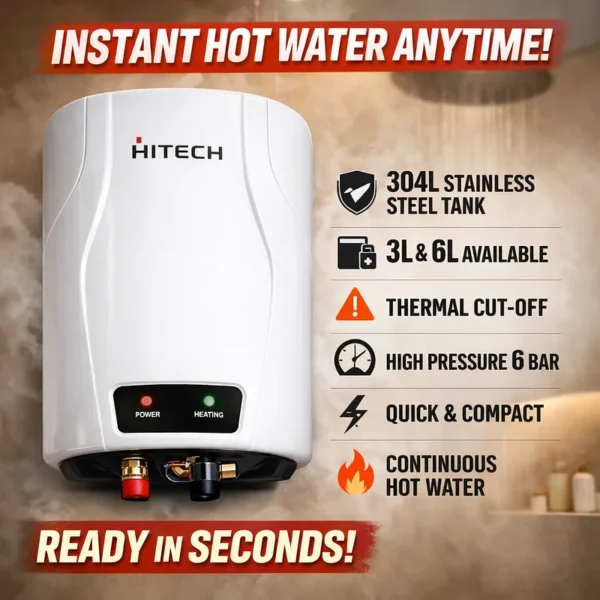
Hitech Malaysia Instant Plus 3/6 ltr Instant Electric Water Heater Geyser – Instant Plus Electric Water Heater Geyser
Price range: ₨8,247 through ₨9,278 -31% Saved ₨ 4,154